Welcome to our store
Discover which Nature Made vitamins and supplements can support your wellness goals†
Get started now.
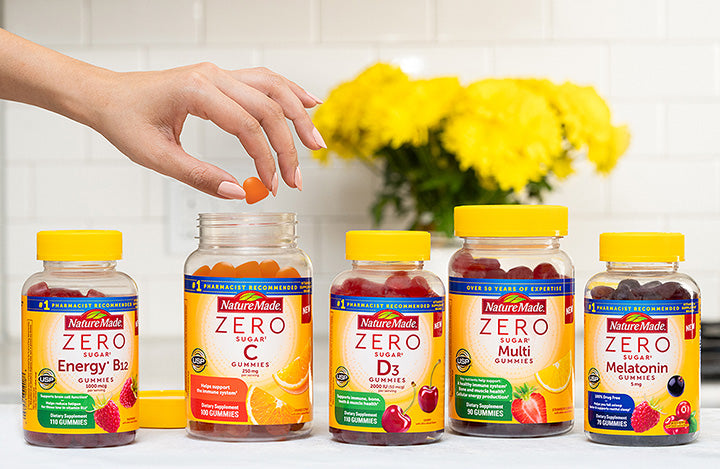
Discover how you can get the benefits you want from the nutrients you need without the sugar normally found in gummies.†
New Zero Sugar Gummies‡
Access expert insights, research, and other helpful content related to your health.
Explore Health Resources
Learn where our story began, and how we continue to evolve alongside our customers.
Discover Nature Made$0.00 away from Free Shipping You have earned Free Shipping*
Apr 15, 2026
Healthy Aging
articles
As we age, it becomes increasingly important to make informed decisions about our daily health. That includes a wide range of topics, such as lifestyle and dietary choices. Taking an active interest in your health is one of the best ways to support aging gracefully.
One popular choice is dietary supplements. But many older adults wonder whether supplements are truly helpful. Let’s explore how certain vitamins and minerals can help support your health as you age.
The first step to understanding how supplements work is to learn what dietary supplements are. Some dietary supplements are a convenient way to provide your body with key nutrients, complementing a balanced diet filled with nutrient-dense foods. These supplements are designed to help you bridge potential nutrient gaps that may arise from dietary restrictions, limited access, or inconsistent schedules.
Supplements come in a variety of forms, including gummies, softgels, and tablets, and can contain essential vitamins and minerals, as well as other important ingredients such as omega-3 fatty acids, CoQ10, and more.
Supplements and vitamins work by breaking down in the digestive system and being absorbed into your body. Some vitamins are water-soluble, which means they dissolve and absorb easily in water. Others are fat-soluble, meaning they need dietary fat or oil, such as vegetable oils, to be absorbed. That’s why supplements that provide fat-soluble vitamins should generally be taken with a meal for optimal absorption. These nutrients, once absorbed, are now available for your body to use in its daily processes, supporting countless body functions.†
It’s also important to note that supplements work alongside a balanced diet; they don’t replace it. So, choose nutrient-dense foods, choose whole grains, and avoid over-processed foods.
As your body’s needs change with age, it’s important to know how nutritional support might be beneficial to your health and wellness. Common nutritional gaps with age include calcium, vitamin D, and vitamin B12. Calcium and vitamin D are essential to bone health, which becomes increasingly important with age, as calcium is a major building block of bones, and vitamin D helps the body absorb calcium more efficiently. Vitamin B12 is also key to the body’s energy metabolism, helping to transform the food we eat into cellular energy our body can use.†
Vitamins are essential nutrients, which means that, because our body can’t produce them internally, we need to get them from outside sources. Let’s break down some of the essential vitamins to pay attention to in your aging journey, the benefits of taking vitamins, and how you might include them in your daily routine.
Ever heard the old saying about how eating carrots is good for your eyes? Here’s the truth behind that old saying: Carrots are a source of carotenoids, such as beta-carotene, which the body turns into vitamin A. In turn, vitamin A is an essential nutrient that supports healthy eye function.
Carotenoids are found in, yes, carrots, but also sweet potatoes, spinach, and mangos. You can also find pre-formed vitamin A in animal products, such as salmon, hard-boiled eggs, and beef liver.[1]†
“Vitamin B” is actually a group of 8 vitamins with similar functions in the body, known as B-vitamins. These essential vitamins support cellular energy metabolism and play a role in supporting healthy nerve function. Vitamin B12 is mostly found in animal products, and vitamin B6 can be found in chicken, fish, soybeans, avocados, bananas, cabbage, and cauliflower.†
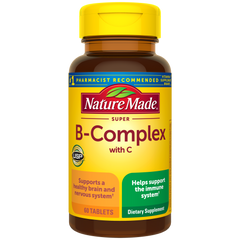
Folic Acid is another B vitamin, and it’s especially important for women of childbearing age. Nature Made’s Prenatal & Postnatal Supplements include a source of folic acid along with other essential nutrients for every state of the pregnancy journey. Our Super-B Complex with C Tablets include all 8 B vitamins alongside vitamin C and calcium in one daily tablet.†
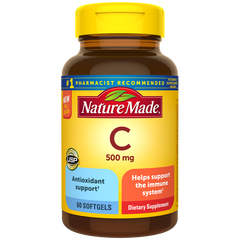
Vitamin C is known as one of the important immune nutrients, supporting the immune system’s function and working as an antioxidant to neutralize free radicals. It is also a key component of collagen synthesis in the body; collagen has many uses in the body but notably is one of the building blocks of healthy skin. Vitamin C is most famously found in citrus fruits, though it’s also present in broccoli and strawberries.†
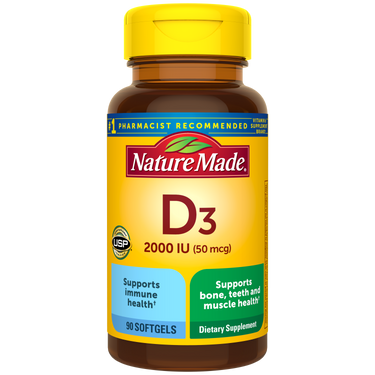
Vitamin D, which we mostly get from sunlight, supports bone health by helping the body absorb calcium, and plays an important role in immune system support. Vitamin D is not present in high levels in many foods, though it can be found in egg yolks and certain fatty fish, like salmon, mackerel, and sardines.†
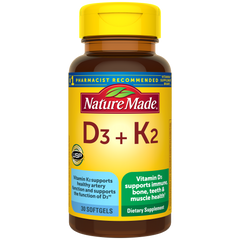
Vitamin K comes in two primary forms, vitamin K1 and vitamin K2. Both forms of vitamin K support healthy vascular function and support the function of Vitamin D3 for healthy bones. Vitamin K1 is found in leafy green vegetables, and vitamin K2 is found primarily in animal products, along with fermented foods.†
While supplements may often be referred to simply as “vitamins,” many also contain several essential minerals. These are just as important to your body’s function, so don’t forget to support your mineral intake along with your vitamins.
Calcium is one of the essential building blocks of our bones, playing a key role in the process of bone mineralization. While you are probably familiar with calcium’s presence in milk, you can also find calcium in yogurt, cheese, legumes, and green vegetables like broccoli and kale.†
Magnesium is a many-functioned mineral, playing a role in over 300 enzymatic functions in the body. Magnesium also supports nerve, muscle, bone, and heart health. Despite this, over half of U.S. adults (54%) don’t consume enough magnesium in their daily diet [2]. You can find magnesium in nuts, beans, whole grains, and dark, leafy green vegetables.†
Zinc is another essential mineral, supporting a healthy immune response and healthy cognitive function. Older adults and vegetarians are likely to require more zinc intake in their daily diets.[3] The recommended dietary allowance of zinc for adults 19+ is 11 mg for men, 8 mg for women, 11 mg during pregnancy, and 12 mg during lactation.[4] Zinc is found in foods like crab, oysters, and turkey, as well as yogurt, milk, beans, and some fortified breakfast cereals.†
Omega-3 fatty acids are long-chain fatty acids found commonly in fish oil that support heart health. Our Ultra Omega-3†† from Fish Oil Softgels support a healthy heart, brain, and eyes, as well as a healthy mood. 68% Americans do not reach the recommended amounts of omega-3s EPA and DHA in their daily diet.[5]†
Older adults looking to take a more active role in supporting their health may want to look beyond vitamins and minerals and explore other nutrients and ingredients that can provide support. These may not fall quite as easily into those two categories, but that doesn’t mean you should ignore them.
Also known as Coenzyme Q10, CoQ10 plays an essential role in cellular energy production and cardiovascular health. Cholesterol-lowering statin drugs can inhibit CoQ10 production in the body. A CoQ10 supplement, like our CoQ10 Softgels, can help replenish this important nutrient.▲†
SAM-e is a dietary source of sulfur, which is a critical component of joint tissue. Supporting your body with a SAM-e supplement, like our SAM-e Complete®◆ Tablets, can help support joint comfort, which may naturally deteriorate with physical activity and age.†
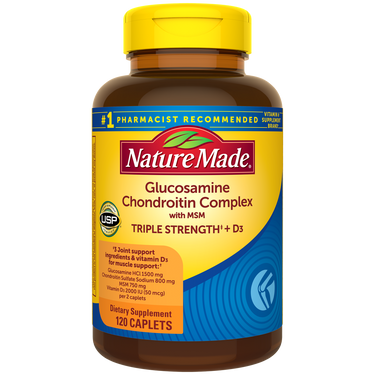
Nature Made offers a Glucosamine Chondroitin Complex with MSM Triple Strength‡ + Vitamin D3, specially formulated for joint and muscle support. Glucosamine helps support healthy joint cartilage, Chondroitin helps support joint cushioning, and MSM supports joints as a source of dietary sulfur.†
Creatine Monohydrate is an amino acid that supplies energy to muscles to be used during physical activity. Our Micronized Creatine Monohydrate Drink Mix Powder supports healthy aging, muscle function & muscle strength, and cellular energy metabolism in muscle when paired with resistance training.†
People often wonder whether to take a multivitamin vs. individual vitamins, and whether you can take them together. If you’re looking for a wide range of support from many nutrients at once, multivitamins work by packaging essential vitamins and minerals into a convenient form and can serve as a great foundation for a supplement routine. However, if your dietary intake lacks one or two specific nutrients, you may prefer to target them with an individual supplement.
Additionally, there are some nutrients, like omega-3 fatty acids and CoQ10 that are not commonly found in daily multivitamins and may be taken in addition to a multivitamin. You may also be interested in individual supplementation for nutrients like calcium in addition to the amount included in your multivitamin.
Whatever you choose, supplements can easily fit into your daily routine, particularly if paired with a regular meal, helping to ensure you are taking dietary supplements with a meal including dietary fat and water for proper absorption.
The first thing you should do is speak with your doctor before starting a supplement routine. A trusted health care professional is equipped with personalized information to help guide you in your unique health goals. When choosing a supplement on the store shelves, pick a trusted brand and look for supplements that have been tested and verified by a third party.
Many Nature Made products have had their ingredients, potency, and manufacturing process verified by the United States Pharmacopeia (USP). We also recommend keeping a log once you start your routine to monitor the consistency of your intake.
Q: Can supplements replace a healthy diet?
A: No! Supplements can’t replace a healthy diet: they are not food, and they do not take the place of a meal. Supplements work by complementing a healthy, balanced diet, helping to bridge possible nutrient gaps.
Q: Are supplements safe for long-term use?
A: Supplements are generally safe for long-term use, and most supplements work best when taken consistently, providing your body with a daily source of essential nutrients.
Q: How do I know which supplements I actually need?
A: Consult with a trusted health care professional or a registered dietitian to assess your dietary nutrient intake; they can help point you in the direction of supplementation that may benefit you.
While healthy aging requires a whole-body approach, specific supplements can be a useful tool in your bag to support consistent nutrient intake. Make informed choices and talk with a medical professional for guidance around supplementation. Choosing the right dietary supplements can help support your daily wellness. Explore Nature Made’s range of healthy aging supplements to find the nutrients that fit your lifestyle.†
††As ethyl esters
▲CoQ10 is not intended to serve as a replacement for statin drug therapy.
♦Complete because studies have shown that SAM-e helps support a healthy mood and joint comfort.†
‡Contains: Glucosamine 1500 mg, Chondroitin 800 mg, MSM 750 mg, Vitamin D3 2000 IU (50 mcg).
† These statements have not been evaluated by the Food and Drug Administration. These products are not intended to diagnose, treat, cure or prevent any disease.
NatureMade Copywriter
Graham has a degree in film with a focus on screenwriting from the University of California, Santa Cruz. He enjoys learning new things and finding the best, most engaging way to communicate them to a wide audience. Graham appreciates simplicity in life and nutrition, and wants to find the easiest, no-stress ways to stay healthy.
Read More about Graham Morris
Science and Health Educator
Lynn is a Registered Dietitian (R.D.) and is a member of the Medical and Scientific Communications team at Pharmavite. She has over 20 years of experience in integrative and functional nutrition and has given lectures to health professionals and consumers on nutrition, dietary supplements and related health issues. Lynn frequently conducts employee trainings on various nutrition topics in addition to educating retail partners on vitamins, minerals and supplements. Lynn has previous clinical dietitian expertise in both acute and long-term care, as well as nutrition counseling for weight management, diabetes, and sports nutrition. Lynn earned a bachelor’s of science in Nutrition with a minor in Kinesiology/Exercise Science from The Pennsylvania State University. She earned a M.S. degree in Human Nutrition from Marywood University in Scranton, Pennsylvania. Lynn is an active member of the Academy of Nutrition and Dietetics, Sports Cardiovascular and Wellness Nutritionists, Dietitians in Functional Medicine, and holds a certification in Integrative and Functional Nutrition through the Academy of Nutrition and Dietetics.
Read More about Lynn M. Laboranti, RDReceive the Latest News and Special Offers