Person resting in bed with yellow bedding.

When Should You Take Melatonin to Help You Fall Asleep?

Mar 13, 2026 FAQs articles Melatonin articles Sleep Tips articles
6 MIN

Person resting in bed with yellow bedding.

Sleep is important to almost every aspect of our lives, but sometimes our regular sleep cycles can be disrupted. Melatonin is a popular occasional sleep aid because it supplements the melatonin hormone in our bodies to help regulate sleep and wake cycles. So, when should you take melatonin?

Melatonin can be a helpful tool for those looking to occasionally support their sleep. The ideal timing of when you can take melatonin supplementation can vary depending on different situations, so it's good to be mindful and decide what works best for you. Let's dig into what factors might affect your melatonin timing.

When Should You Take Melatonin to Help You Fall Asleep?

Wondering, when should I take melatonin? Melatonin shouldn’t be taken regularly, just on those occasions when additional sleep support is needed. Generally, melatonin works relatively quickly to support your sleep, so we recommend taking melatonin on those occasions when you need some extra help falling asleep, depending on your specific sleep needs. Sometimes we might need a little sleep support to help adjust our sleep cycles, and melatonin supplementation works as an occasional sleep aid to help reset your sleep cycle.

When Should I Take Melatonin for Different Situations?

Melatonin can sometimes be helpful for sleep support, but occasional sleep difficulties often take different forms. How does your need for melatonin change in other situations? Let's break down what some of these sleep situations might be and when melatonin supplementation can be most effective in each.

Occasional Sleepless Nights

One of the most common reasons people use melatonin supplements is a disruption of sleep from occasional sleepless nights. Supplementing your body's melatonin with a supplement like our Zero Sugar Melatonin Extra Strength Gummies an hour before bedtime can function as a non-habit forming way to help support your rest.

Travel and Jet Lag

Often, when we travel between time zones, it can be a difficult transition for our sleep cycles. Nighttime can happen hours earlier or later than our bodies are expecting, throwing us off our usual rhythm. Melatonin can help reset your sleep cycle to align with your current time zone. In this case, taking melatonin an hour before your new bedtime can support rest by signaling your body to start preparing for sleep.

Magnesium is another supplement that can help relax your body, something that can be desired after a long plane ride. Can you take magnesium and melatonin together? Yes, in fact, Nature Made Melatonin + Magnesium Gummies provide melatonin to help you fall asleep faster, alongside magnesium to help relax your body.

Shift Work

If you have a new job or are taking a new shift that changes what parts of the day you're sleeping and what parts of the day you're active, temporary use of a melatonin supplement can help your body adjust to the new timing and support building a new cycle for sleep during non-traditional hours. In this case, take melatonin an hour before your new bedtime, signaling the start of a new sleep-wake cycle.

How long does melatonin last? That can depend on the supplement. Wellblends™ Sleep Longer® Tablets provide 3 benefits in 1 blend with L-theanine and GABA to help you unwind by relaxing your mind, and they include immediate-release melatonin to help you fall asleep faster, along with extended-release melatonin to stay asleep longer.

Early Morning Commitments

Sometimes work, travel, or life events can require you to wake up much earlier than you usually do, shortening the time that you would sleep if you went to bed at a regular hour. To help get adequate sleep in these situations, a melatonin supplement taken earlier in the night can help you fall asleep earlier and wake up refreshed, ready to take on the morning's commitments with a full night's rest.

Adjusting to Seasonal Changes

As seasons change and days get longer or shorter, it can be challenging to adapt to the sun's new cycles. An occasional melatonin supplement can help you regulate your sleep and wake cycle during longer daylight hours or shorter winter days that may affect your regular rhythm. In this case, taking melatonin an hour before your usual bedtime can help you adjust to the new daylight hours and maintain your sleep-wake cycle.

Do You Take Melatonin Every Night?

Can you take melatonin every night? No, melatonin is meant for occasional use when needed, whether that's due to jet lag, occasional sleeplessness, or early morning commitments. Melatonin supports restful sleep as an occasional sleep aid.

If you are experiencing persistent sleep difficulties, talk with your doctor or a health care provider to better understand your sleep needs. Discussing melatonin supplementation with your doctor can also help them guide you with personalized advice for sleep support.

What Else Affects Melatonin?

The natural sleep cycle affects melatonin production: the pineal gland produces melatonin in response to darkness,signals and preparing us for rest. Our bodies naturally follow a circadian rhythm that helps regulate when we sleep and when we wake.[1] Everyone's sleep wake rhythm is unique and is affected by when we go to bed every day.

Certain lifestyle habits can also affect our melatonin production. For example, caffeine intake late in the day can make sleep difficult, as it keeps us energetic when our bodies should be slowing down for sleep. Using electronic devices with screens before bedtime is associated with poorer sleep quality.[2] Try to avoid caffeinated drinks and excessive screen time in the latter part of the day and build a regular bedtime ritual to help your body wind down and prepare for restful sleep.

Occasional melatonin supplements come in different forms to support your sleep, including a Melatonin Time Release Gummies that combine the immediate release melatonin to help you fall asleep faster and an extended release of melatonin through the night to help you stay asleep longer.

Tips for Taking

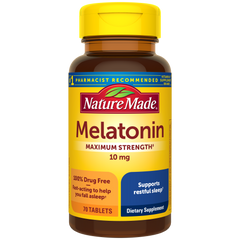
First, it’s important to know that melatonin is not a daily supplement and should not be a regular part of your wellness routine. If you are looking for melatonin supplementation for occasional sleep support, it's best first to find the form you prefer. Some prefer the taste and convenience of Melatonin Gummies, while others prefer Melatonin Tablets.

Do melatonin gummies work? All Nature Made melatonin supplements support restful sleep, whichever form you prefer. Explore Nature Made's Melatonin Collection to find the proper form and dosage that works best for you.

Keeping a consistent bedtime helps your body know when to prepare for rest. Pairing a consistent routine with healthy sleep hygiene and a controlled bedroom environment, free of distracting lights and sounds, can help you put your best fuzzy-socked foot forward when it comes to sleep.

Tracking sleep patterns can also help you better understand your sleep cycle and find what melatonin timing works best for you. How much melatonin should you take? It is recommended to start with a smaller dose and gradually increase until you find the dosage that provides the desired benefits of melatonin.

Melatonin FAQs

Here are some commonly answered questions about melatonin sleep support supplements.

Q: How long does it take for melatonin to work?

A: Melatonin, a common sleep support supplement, usually helps support restful sleep within about 30–60 minutes.

Q: Do you take melatonin every night?

A: No, melatonin supplementation is for intermittent or occasional use only; consult with your physician if you continue to experience sleep difficulties.

Q: Is melatonin safe?

A: Research has shown that melatonin is relatively safe to take on a short-term basis, but certain people should not take it.[3] If you are pregnant, nursing, taking any medications, or have any chronic medical conditions, you should not use melatonin unless advised by a physician.

Q: Can I take melatonin if I wake up in the middle of the night?

A: Some people may use melatonin if they struggle to fall back asleep, but timing should be discussed with a healthcare provider. Melatonin should generally be used at least 8 hours before wake-time to avoid morning drowsiness. Nature Made Wellblends™ Back to Sleep™ Fast Dissolve Tablets include a lower dose of melatonin, designed to be taken at least 4 hours before wake time for middle-of-the-night sleep support in a berry-flavored tablet.

Getting Restful Sleep

The best timing for melatonin can depend on sleep habits, lifestyle, and personal preferences, so you should explore your options until you land on the right method for you. Always follow the recommended use given on your melatonin supplement’s label and practice safe supplementation. Melatonin is meant for occasional use. Discuss sleep and supplementation with your primary care provider before adding starting a new dietary supplement.

Melatonin is available in several forms and dosages to suit your unique needs, and it will help occasionally support restful sleep. Nature Made also offers other Sleep Supplements, so check them out to see whether valerian root vs. melatonin works better for you. Explore Nature Made's Melatonin Supplements today, including Kids First® Sleep Gummies, designed to help ease your children into bedtime with 1 mg of melatonin in a delicious gummy. Nature Made is the #1 Pharmacist-Recommended Vitamin & Supplement Brand.*

References:

  1. Savage RA, Zafar N, Yohannan S, et al. Melatonin. [Updated 2024 Feb 9]. In: StatPearls [Internet]. Treasure Island (FL): StatPearls Publishing; 2025 Jan-. Available from: https://www.ncbi.nlm.nih.gov/books/NBK534823/
  2. Pham HT, Chuang HL, Kuo CP, Yeh TP, Liao WC. Electronic Device Use before Bedtime and Sleep Quality among University Students. Healthcare (Basel). 2021;9(9):1091. Published 2021 Aug 24. doi:10.3390/healthcare9091091
  3. Mayo Clinic. Melatonin. Mayo Clinic. Published March 3, 2021. https://www.mayoclinic.org/drugs-supplements-melatonin/art-20363071

‡ Not a low calorie food

◆Compared to Nature Made® Wellblends™ Melatonin products

† These statements have not been evaluated by the Food and Drug Administration. These products are not intended to diagnose, treat, cure or prevent any disease.

Authors

Graham Morris

NatureMade Copywriter

Graham has a degree in film with a focus on screenwriting from the University of California, Santa Cruz. He enjoys learning new things and finding the best, most engaging way to communicate them to a wide audience. Graham appreciates simplicity in life and nutrition, and wants to find the easiest, no-stress ways to stay healthy.

Read More about Graham Morris

Kalyn Williams, RDN

Science and Health Educator

Kalyn is a Registered Dietitian-Nutritionist and a Science & Health Educator with the Medical and Scientific Communications team at Pharmavite. Her experience in the field of nutrition prior to joining Pharmavite has included community and public health education, media dietetics, and clinical practice in the areas of disordered eating, diabetes, women’s health, and general wellness. Kalyn received her Bachelor of Science degree in Nutrition and Dietetics from Arizona State University in Phoenix, Arizona, and completed her dietetic supervised practice in Maricopa County, AZ, with an emphasis on public health. Kalyn is certified in Integrative and Functional Nutrition through the Academy of Nutrition and Dietetics, where she is an active member in addition to memberships in Dietitians in Functional Medicine, Women’s Health Dietitians, and the International Federation of Eating Disorder Dietitians.

Read More about Kalyn Williams, RDN