Nature Made Fish Oil Minis, CoQ10, and CholestOff Complete supplements next to a bowl of nuts and berries and a glass of water on a table with a soft natural background.

Understanding Cholesterol and Heart Health
Sep 22, 2026 Heart Health articles
6 MIN

Nature Made Fish Oil Minis, CoQ10, and CholestOff Complete supplements next to a bowl of nuts and berries and a glass of water on a table with a soft natural background.

Cholesterol is a word you hear a lot when discussing heart health, but what exactly is it and why is it important? Maintaining healthy cholesterol levels plays an important role in heart health, and understanding cholesterol can help you have more informed discussions with your primary healthcare practitioner about your heart health routine.

We’ll cover what cholesterol is, the different types of cholesterol, and lifestyle habits that support healthy cholesterol levels, including foods that support heart health. If you have high cholesterol or questions about cholesterol levels, consult a physician for personalized medical advice and treatment guidance.

What Is Cholesterol?

Maintaining healthy cholesterol levels is an important part of heart health, so what is it, exactly? Cholesterol is a waxy substance that travels through your blood and is used to produce hormones (like estrogen) and build cells, which makes it essential to the body.[1] Cholesterol makes bile acids, which help your body absorb fat and fat-soluble vitamins. The liver produces it and you take it in from food sources; it is split into two primary types: LDL and HDL. When you are reviewing your cholesterol with a healthcare practitioner, they will likely look at your total cholesterol levels, LDL cholesterol, HDL cholesterol and triglycerides.

What Are the Different Types of Cholesterol?

There are two major types of cholesterol: LDL and HDL. LDL is often referred to as “bad” cholesterol, and it comes from foods high in saturated fats. LDL is the “bad” cholesterol because it can contribute to plaque build-up. In contrast, HDL is known as “good” cholesterol because it helps remove cholesterol from the arteries to travel back to the liver and is important to maintaining cardiovascular health.[1]

Triglycerides are often measured alongside cholesterol, as they are another type of fat found in the blood, and high levels of triglycerides can contribute to the buildup of LDL cholesterol in your body.[2] A healthcare practitioner best interprets cholesterol levels in the context of overall health, age, family history, lifestyle habits, medications and other risk factors.

Lifestyle Habits That Support Healthy Cholesterol Levels

Supporting healthy cholesterol levels starts with a healthy lifestyle, and we’ll offer guidance on building a heart-healthy routine that supports cholesterol levels and overall cardiovascular health. If you have high cholesterol, consult your primary care provider for medical advice and treatment.

Eat a Heart-Healthy Diet

One great way to support your heart is by paying attention to what’s on your plate. Eating too many foods rich in saturated fats can increase your levels of LDL, or bad cholesterol. A heart-healthy diet often emphasizes fruits, vegetables, whole grains, lean proteins, legumes, nuts, seeds and healthier fats. Include a variety of these foods in your daily diet to help support your heart health.

Try to include at least five servings of fruits and vegetables in your daily diet and choose whole grains instead of refined grains: this means oats, barley, brown rice and whole wheat. Lentils, beans, nuts and seeds can also support a heart-healthy diet; when choosing proteins, include fish or lean proteins, and replace saturated fats with unsaturated fats where possible.

Stay Physically Active

Physical activity can be an important part of a heart-healthy lifestyle that supports healthy cholesterol levels. Working out supports cardiovascular health, and regular movement such as brisk walking, cycling, swimming, or dancing can help support HDL cholesterol and overall heart health.

Exercise doesn’t have to be a chore; finding an activity you enjoy makes it much easier to keep consistent. Check with a healthcare practitioner before starting a new exercise routine, particularly if you have existing health concerns. They can help you create a safe, healthy routine that supports your heart.
Maintain A Healthy Weight

Another healthy lifestyle habit to focus on is weight management. Maintaining a healthy weight can support heart health and may help support healthy cholesterol levels. A routine that includes a balanced diet, physical activity and weight management, along with healthy stress management and adequate sleep, can support a healthy lifestyle, along with medical guidance when needed.


Avoid Tobacco Products

Smoking can lower your body’s HDL, or good cholesterol, and increase the risk of heart disease, among other negative effects. Avoiding tobacco products is an important lifestyle habit for cardiovascular health. You don’t have to do it alone; speaking with a healthcare practitioner can help you navigate the process of quitting with professional support.

Foods That Support Heart Health

Support your cholesterol levels and cardiovascular health by eating a balanced, heart-healthy diet including a variety of foods. Different foods can support your heart health in different ways; for example, foods that include soluble fiber (like fruits, veggies and whole grains) can help reduce cholesterol absorption in the bloodstream when included as part of a heart-healthy eating pattern.[3]

You may have heard of them, but have you learned how to lower cholesterol from your diet with plant sterols and stanols? Plant sterols and stanols are plant-derived compounds found in small amounts in foods like fruits, vegetables, nuts, seeds, whole grains and vegetable oils, and these compounds also play a role in reducing cholesterol absorption. So if there's one lesson to gleam here, it's to include fruits, veggies, and whole grains in a balanced diet.

Nature Made Supplements to Consider

Discuss supplementation with a healthcare practitioner; they can provide optional support to a heart-healthy lifestyle including a balanced diet and physical activity. These supplements for heart health do not replace a healthy lifestyle or diet, but they can supplement them.†

CholestOff®

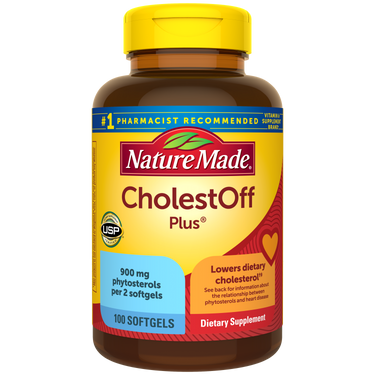
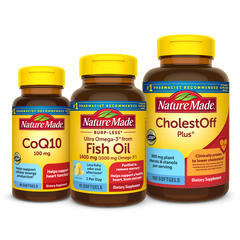
Nature Made offers a collection of CholestOff® supplements that provide plant sterols and stanols to help support a healthy heart.†

Our CholestOff Plus® Softgels are a dietary cholesterol-lowering supplement containing phytosterols, a blend of plant sterols and stanols.†‡ Phytosterols work to help lower dietary cholesterol by reducing absorption of dietary cholesterol into the bloodstream.‡ Products containing at least 400 mg per serving of plant sterols and stanols, eaten twice a day with meals for a daily intake of at least 800 mg as part of a diet low in saturated fat and cholesterol, may reduce the risk of heart disease.

One serving of Nature Made CholestOff Plus® supplies 900 mg of plant sterols and stanols for a daily intake of 1800 mg. See nutrition information for total fat content. Consult a physician before use, especially if taking medications, including medications to lower cholesterol; such as statin drugs.†‡

CholestOff Complete® Softgels contain phytosterols, which are a blend of plant sterols, stanols and pantethine. Phytosterols help lower dietary cholesterol by reducing its absorption into the bloodstream†‡, while pantethine helps reduce the production of cholesterol in the liver. †

Each serving of 3 softgels taken twice daily with water and a meal provides 900 mg phytosterols and 300 mg pantethine. Consult a physician before using this product if pregnant, nursing, taking medications, or currently using medications to lower cholesterol; such as statin drugs. They can help determine whether a CholestOff® supplement is right for you.

Heart Health Supplements†

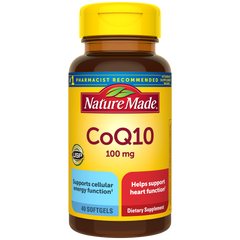
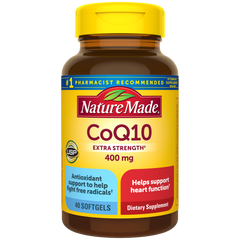
In addition to our CholestOff® supplements, Nature Made also offers CoQ10 supplements, in gummy and softgel form. CoQ10, or Coenzyme Q10, supports heart function and cellular energy production. Certain statin drugs can reduce CoQ10 levels in the body. Nature Made CoQ10 can help replenish this important nutrient.♦† Consult your primary healthcare practitioner before taking CoQ10 supplements if you are taking medications, blood-thinning medication, blood pressure medication, are pregnant/nursing, or have blood clotting issues.

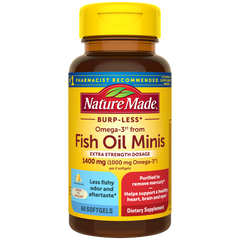
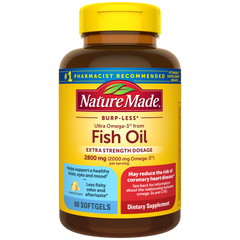
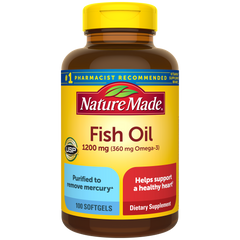
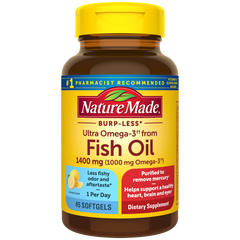
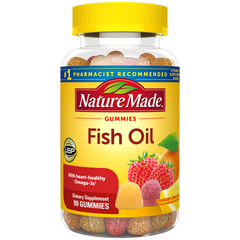
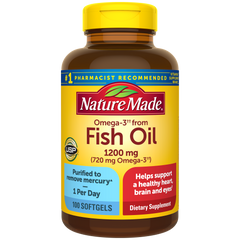
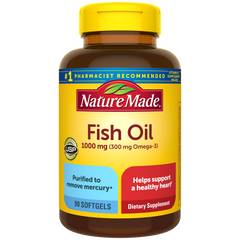
Fish oil supplements offer an easy way to get a daily dose of heart-healthy omega-3s. Our Fish Oil Softgels provide 1200 mg (360 mg Omega-3) per softgel for a total of 2400 mg (720 mg Omega-3) per daily serving. The EPA and DHA omega-3s in fish oil help support a healthy heart.† Supportive but not conclusive research shows that consumption of EPA and DHA omega-3 fatty acids may reduce the risk of coronary heart disease. See nutrition information for total fat, saturated fat and cholesterol content.

Flaxseed Oil Softgels are a daily source of ALA omega-3 and help support a healthy heart. One daily softgel provides 1000 mg flaxseed oil, including 500 mg ALA omega-3 per serving.†

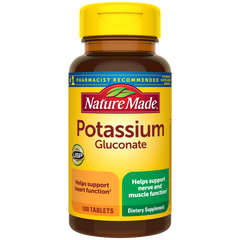
Our Potassium Gluconate 550 mg Tablets support heart and nerve function, with 90 mg of potassium per tablet. Potassium helps support heart function by helping to control the activity of the heart muscle.† Discuss your potassium needs with a healthcare practitioner before adding a potassium supplement to your routine, especially if taking medications or managing a health condition.

Heart health supplements can play a supportive role in a healthy lifestyle that includes a balanced diet and regular physical activity. Explore our heart health collection today!†


‡ Products containing at least 400 mg per serving of phytosterols (plant sterols and stanols), eaten twice a day with meals for a daily intake of at least 800 mg as part of a diet low in saturated fat and cholesterol, may reduce the risk of heart disease. One Nature Made® CholestOff Plus® or CholestOff Complete® serving supplies 900 mg of phytosterols for a daily intake of 1800 mg (See nutrition information for total fat content).

♦ CoQ10 is not intended to serve as a replacement for statin drug therapy.


† These statements have not been evaluated by the Food and Drug Administration. These products are not intended to diagnose, treat, cure, or prevent any disease.


References:

  1. American Heart Association. What is Cholesterol? Accessed August 27, 2026. https://www.heart.org/en/health-topics/cholesterol/about-cholesterol/
  2. CDC. LDL and HDL Cholesterol and Triglycerides. Cholesterol. May 15, 2024. Accessed August 27, 2026. https://www.cdc.gov/cholesterol/about/ldl-and-hdl-cholesterol-and-triglycerides.html
  3. Surampudi P, Enkhmaa B, Anuurad E, Berglund L. Lipid Lowering with Soluble Dietary Fiber. Curr Atheroscler Rep. 2016;18(12):75. doi:10.1007/s11883-016-0624-z

Authors

Graham Morris

NatureMade Copywriter

Graham has a degree in film with a focus on screenwriting from the University of California, Santa Cruz. He enjoys learning new things and finding the best, most engaging way to communicate them to a wide audience. Graham appreciates simplicity in life and nutrition, and wants to find the easiest, no-stress ways to stay healthy.

Read More about Graham Morris

Sandra Zagorin, MS, RD

Science and Health Educator

As a member of the Medical and Scientific Communications team, Sandra educates healthcare professionals and consumers on nutrition, supplements, and related health concerns. Prior to joining Pharmavite, Sandra worked as a clinical dietitian at University of Chicago Medicine in the inpatient and outpatient settings. Sandra received her Bachelor of Science degree in Nutritional Science, with minors in Spanish and Chemistry from the University of Arizona in Tucson, AZ. She earned her Master of Science degree in Clinical Nutrition from RUSH University in Chicago, IL. As part of her Master’s program, Sandra performed research on physical activity participation and correlates in urban Hispanic women.

Read More about Sandra Zagorin, MS, RD