Nutrients That Support Joint Health† Plus Tips To Support Joints As You Age

Nutrients That Support Joint Health† Plus Tips To Support Joints As You Age

Apr 18, 2026 Joint Health articles
4 MIN

Nutrients That Support Joint Health† Plus Tips To Support Joints As You Age

Quick Health Scoop

  • Supporting healthy joints is important as we age
  • Key nutrients used in joint supplements, such as turmeric, collagen peptides, SAM-e, MSM, glucosamine, and chondroitin, can help support joint health
  • Healthy lifestyle habits that help support joints include staying active, staying hydrated, and practicing healthy posture

Why Is Joint Health Important?

Considering the daily wear and tear your joints endure throughout an active life, it’s important to pay attention to them and take a proactive role in their care. If you are searching for how to support joint health, it’s a good idea to add key nutrients found in joint supplements to your daily wellness regimen.

Which Nutrients Support Joint Health?

If you’re looking for key joint health vitamins and nutrients, you may want to consider including these key nutrients in your routine through dietary sources or supplements:

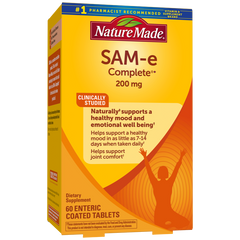
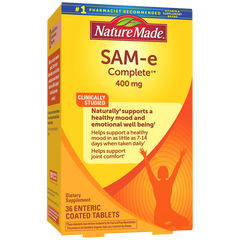
  • SAM-e (S-adenosylmethionine) is a molecule that is produced and used by our bodies. SAM-e provides a source of sulfur, which is a critical component of joint tissue, and helps support joint comfort. SAM-e is not found in foods, but it can be produced in the body with methionine, an amino acid found in meat, grains, and dairy products.[1] The only way to increase direct SAM-e intake is through dietary supplements, like Nature Made SAM-e Complete®†† 400 mg Tablets, which can help replenish your SAM-e levels, and support joint comfort, which may naturally deteriorate with physical activity and age.
  • Glucosamine is naturally found in joint tissue and is a key component in cartilage, which is the tissue that cushions joints. Glucosamine is produced in the body but is also available as a dietary supplement. A daily dosage of 1500 mg of glucosamine helps support healthy joint cartilage.
  • Chondroitin is a compound that is a building block for connective tissues, including joint cartilage. Chondroitin is also produced in the body, and since it is not easily found in food, it is available as a dietary supplement. A daily dosage of 800 mg of chondroitin helps support joint cushioning.
  • MSM (Methylsulfonylmethane) is a source of dietary sulfur, a trace element used by the body in collagen, connective tissue, and joint cartilage. MSM is produced by the body but is also found in plants and animals, though in small amounts. Some foods that contain MSM include apples, raspberries, leafy green vegetables, whole grains, coffee and tea. MSM is also available as a dietary supplement, as it is usually combined with Glucosamine and Chondroitin to help support joint health.
  • Turmeric is an ingredient extracted from the Curcuma longa plant, which is commonly known as a spice in Indian cuisine. Nature Made Turmeric Curcumin High Absorption Capsules include a turmeric curcumin rhizome extract that has been clinically studied to support both muscle and joint health. One daily turmeric capsule helps support joint health and mobility as you age and supports muscle soreness recovery associated with an active lifestyle.▲†
  • Collagen is an important protein found in cartilage, bone and skin. Collagen peptides are a form of collagen that has been broken down for easier absorption. Our Collagen Peptides Drink Mix Powder include a clinically studied ingredient to support healthy joints◆▪️ alongside biotin for healthy hair, skin and nails support.

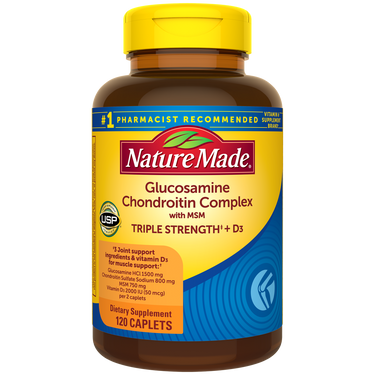
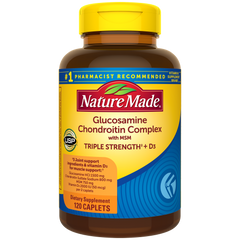
Nature Made Joint Supplements include a range of options to support your joint health with dietary supplements. Many joint support formulas use a combination of glucosamine, chondroitin and MSM. Nature Made® Glucosamine Chondroitin Complex with MSM Triple Strength combines these nutrients in a joint support formula, along with vitamin D3 to support bone, teeth and muscle health. Always consult with your doctor before adding a supplement to your daily routine.

Tips to Support Joint Health as You Age

That’s not all! Besides the nutrients listed above, there are some healthy habits you can incorporate into your lifestyle to help support your bone and joint health:

  • Stay hydrated: You probably already know that drinking water is important, but how does it help your joints? Approximately 65-80% of your joint cartilage is made up of water, which is what gives it a lubricating effect on joints.[2] When your body is not receiving enough water, it will pull water from other areas of your body, which can impact your joints. For added flavor, consider adding sliced lemons, limes, or cucumber to your water.
  • Stay active: Staying active doesn’t mean you need to sprint laps: constant high-intensity exercise can put pressure on your joints, knees especially. Look for activities that will help with joint stiffness, such as walking, swimming, and even water aerobics. The buoyancy of water reduces weight-bearing stress on joints.[3]
  • Properly warm up and cool down after your workout: When you warm up before your workout, you essentially prepare your body for exercise. Your heart pumps blood to your muscles, helping to increase your flexibility and range of motion. The same preparation applies after your workout. Cooling down gives your body time to recover while keeping blood circulating and helping with muscle and joint flexibility.
  • Watch your posture: Healthy posture can help alleviate unwanted stress on your muscles and joints. What is healthy posture? Healthy posture maintains curves at your neck, mid back and low back, and places your head above your shoulders, and the top of your shoulders over your hips.[4]
  • Eat a well-balanced diet: Make sure you’re including lots of fruits, vegetables, whole grains and lean protein in your daily diet. This will help ensure you are getting a variety of the nutrients your body needs every day, especially nutrients important for bone health like vitamin D, calcium, and magnesium.

The Bottom Line

As joints age over time from use, supporting joint health becomes ever more important. Therefore, consider adding some of the key nutrients used in joint supplements, such as turmeric, SAM-e, glucosamine, chondroitin, and MSM, to your daily regimen to help support joint comfort. Also look to add some healthy habits to your daily routine, like staying hydrated, staying active, and eating a well-balanced diet.

When choosing supplements, look for a trusted brand with ingredients backed by science. Nature Made is the #1 pharmacist recommended vitamin and supplement brand.* Shop Nature Made’s joint supplements today!

Learn More About Joint Health:


††Complete because studies have shown that SAM-e helps support a healthy mood and joint comfort.† 

‡Contains Glucosamine 1500 mg, Chondroitin 800 mg, MSM 750 mg, Vitamin D3 2000 IU (50 mcg). 

◆Studied in young adults. 

▲In active young adults. 

▪️ Blend consists of two collagen peptide ingredients. 

*Based on a survey of pharmacists who recommend branded vitamins and supplements.

References

  1. Górska-Warsewicz H, Laskowski W, Kulykovets O, Kudlińska-Chylak A, Czeczotko M, Rejman K. Food Products as Sources of Protein and Amino Acids-The Case of Poland. Nutrients. 2018;10(12):1977. Published 2018 Dec 13. doi:10.3390/nu10121977
  2. Sophia Fox AJ, Bedi A, Rodeo SA. The basic science of articular cartilage: structure, composition, and function. Sports Health. 2009;1(6):461-468. doi:10.1177/1941738109350438
  3. Ruoti RG, Troup JT, Berger RA. The effects of nonswimming water exercises on older adults. J Orthop Sports Phys Ther. 1994;19(3):140-145. doi:10.2519/jospt.1994.19.3.140
  4. MedlinePlus. Guide to Good Posture. Medlineplus.gov. Published 2019. https://medlineplus.gov/guidetogoodposture.html

† These statements have not been evaluated by the Food and Drug Administration. These products are not intended to diagnose, treat, cure or prevent any disease.

Authors

Amy Mills Klipstine

NatureMade Sr. Copywriter

Amy has an MFA in Creative Writing from Antioch University in Los Angeles and is a credentialed English teacher, though she left the classroom to write full time. She especially enjoys creating educational content about health, wellness, and nutrition. Her happy place is in the kitchen, and when not writing, you can find her trying out “kid-friendly recipes” and “healthy desserts for chocolate lovers” from her Pinterest board.

Read More about Amy Mills Klipstine