Welcome to our store
Give your immune routine a boost with key nutrients like Vitamin D, Vitamin C & more.
Build your immune routine.
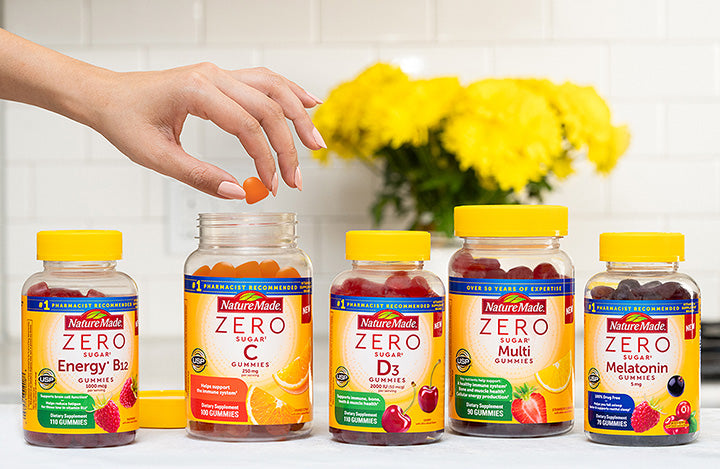
Discover how you can get the benefits you want from the nutrients you need without the sugar normally found in gummies.†
New Zero Sugar Gummies‡
Looking for quick ways to save? We have different options for you to save on the vitamins and supplements you want most.
Learn More
Access expert insights, research, and other helpful content related to your health.
Explore Health Resources
Learn where our story began, and how we continue to evolve alongside our customers.
Discover Nature Made$0.00 away from Free Shipping You have earned Free Shipping*
Sep 23, 2026
Healthy Skin
articles
,
Minerals
articles
There’s more to copper than coins. Copper is an essential trace mineral, meaning the body needs it in small amounts. We’ll break down what role copper plays in the body, how you regularly get it from food in your diet, and how much of this essential mineral you need every day. And to top it off, we’ll give you some expert tips on how copper can fit into a balanced diet or multivitamin routine. It’s always important to talk to a healthcare practitioner before starting or changing a supplement routine, especially if you're pregnant, nursing, taking medications, taking zinc supplements, or managing a health condition.
You’re probably aware of copper for its role in the metallic alloy bronze, found famously in the penny, but this mineral is more than pocket change; did you know our body needs it too? That’s because our body can’t produce copper on its own, so we need to provide it through either food or supplementation.
Thankfully, many foods provide these essential trace minerals, including shellfish, meats, nuts, legumes and whole grains. Including these food sources in your diet can help you get the trace amount of copper you need every day, but dietary restrictions or limited access to certain foods can leave your diet lacking in copper. Supplements can help by providing a consistent, regular source of copper benefits.
Our body needs all sorts of minerals, but what sets copper apart? Copper is an essential trace mineral needed for enzymes in the body to function, including those that support skin. That’s because copper is one of the key nutrients the body uses to build collagen, an important protein that is present in high quantities in the skin. Benefits of copper include supporting collagen synthesis, which is also important in supporting our connective tissues.†
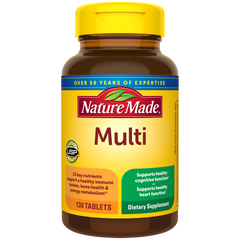
Because of its role in skin support, copper is often included alongside other beauty-supporting nutrients in products like our Hair-Skin-Nails‡ Softgels, which include biotin to support healthy hair, skin and nails, vitamin C for collagen production, plus vitamin A, zinc and copper to support healthy skin and collagen synthesis. You can also find copper in multivitamins as part of daily nutritional support, like in our Multivitamin Tablets with Iron. Copper and iron also work together in the body, as copper is required for an enzyme to convert iron into a form the body can use to support healthy red blood cell function. That’s why these two minerals are often paired together in supplements.†
As with all essential nutrients, the best way to get them is by including food sources in your diet. In fact, many people get enough copper through a balanced diet that includes a variety of nutrient-dense foods. For copper sources, look to shellfish, meats like beef and pork, turkey, beans, nuts and legumes. Other copper-rich foods include whole grains, dark leafy greens and avocados. Like with all essential nutrients, aim for a balanced diet with a variety of foods that increases the nutrients you get every day.
How much copper per day you need can vary by age and life stage, such as during pregnancy and lactation. Adults aged 19 and up generally need 900 mcg of copper daily. This amount increases to 1000 mcg per day during pregnancy, and then to 1300 mcg per day during lactation/breastfeeding.[1]
Remember, copper needs are measured in micrograms (mcg), not milligrams (mg). That’s because copper is a trace mineral, which means it's needed only in small amounts, whether from food, beverages, multivitamins, or other supplements. Consult with a healthcare practitioner for personalized guidance on daily copper intake, especially during pregnancy or breastfeeding.
Including sources of copper in your diet is important, as it’s an essential mineral. If you don’t get enough copper over a long period of time, your body’s ability to support its normal functions that rely on copper may be impacted. While Copper deficiency is uncommon, some people may consume less than their estimated needs.
For example, around 6% to 15% of adults ages 19+ who do not take dietary supplements containing copper have copper intakes below the Estimated Average Requirement (EAR). For those who do take supplements that contain copper, around 2.2% to 7.2% have intakes below the EAR.[1,2] Having an intake below the EAR is not a deficiency, but it is lower than what the average person should aim for in their daily intake.
High doses of zinc from supplementation may interfere with copper absorption.[1] If you’re concerned about your copper intake, including dietary sources and supplementation, consult a healthcare practitioner for personalized guidance.
Yes, you can get too much copper. While copper is an essential mineral, it is only needed in low doses, and excessive intake can be harmful, especially when combining supplements. The adult upper limit for copper is 10 milligrams (or 10,000 micrograms) from food, beverages and supplements.[1]
Copper can come from many sources, including multivitamins and standalone dietary supplements, so check all labels to ensure you don’t exceed the upper limit. Avoid taking multiple supplements that contain copper unless a healthcare practitioner directs you to do so. Always get professional guidance before taking a copper supplement, especially if pregnant, nursing, taking medications, taking zinc supplements, or managing a health condition.
Copper and zinc are often categorized as beauty nutrients and are commonly found together in multivitamins, beauty supplements and other formulas. Zinc is another essential mineral that supports healthy skin, and both copper and zinc can provide antioxidant support. However, high doses of zinc in supplements can interfere with copper absorption. That’s why it’s important to review your labels for total zinc and copper intake, and to discuss with a healthcare practitioner to determine the combination of nutrients that are most appropriate for your daily routine.
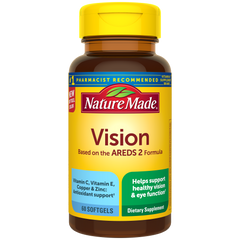
Because copper is an essential mineral that supports collagen production, many multivitamins include it as part of daily nutritional support. Understanding supplement labels can help you make informed decisions. Check for beauty-supporting nutrients when you pick a supplement, including biotin, vitamin C, zinc and copper. Copper is also included in our Vision Based on the AREDS 2 Formula supplement, which includes vitamin C, vitamin E and zinc to provide antioxidant support, and support healthy eye function.†
Copper is also included in many multivitamin supplements for men and women, such as Men’s Multivitamin Tablets and Men’s Multivitamin 50+ Tablets, along with daily nutritional support aimed at women’s needs with our Women’s Multivitamin Tablets and Women’s Multivitamin 50+ Tablets.†
So, copper isn’t just a shiny metal, it is an essential trace mineral that the body needs in small amounts to support collagen synthesis and skin support. You can support your daily intake of copper through nuts, seeds, legumes, whole grains, shellfish and other nutrient-dense foods; these food sources and supplementation can help you achieve the recommended 900 mcg of copper per day (increasing to 1,000 mcg during pregnancy and 1300 mcg during lactation).[1]
Supplementing with high amounts of zinc, such as greater than 30 mg per day, may potentially interfere with copper absorption, so it is helpful to review supplement labels and talk with a healthcare practitioner before adding any supplement to your daily routine.
As always, the best foundation for daily nutrition is a balanced, varied diet, and a multivitamin or supplement including copper may help some adults fill potential nutrient gaps when appropriate. Explore the Nature Made Hair Skin Nails Collection today!
‡Supports healthy hair, skin & nails†
† These statements have not been evaluated by the Food and Drug Administration. These products are not intended to diagnose, treat, cure, or prevent any disease.
NatureMade Copywriter
Graham has a degree in film with a focus on screenwriting from the University of California, Santa Cruz. He enjoys learning new things and finding the best, most engaging way to communicate them to a wide audience. Graham appreciates simplicity in life and nutrition, and wants to find the easiest, no-stress ways to stay healthy.
Read More about Graham Morris
Science and Health Educator
Lynn is a Registered Dietitian (R.D.) and is a member of the Medical and Scientific Communications team at Pharmavite. She has over 20 years of experience in integrative and functional nutrition and has given lectures to health professionals and consumers on nutrition, dietary supplements and related health issues. Lynn frequently conducts employee trainings on various nutrition topics in addition to educating retail partners on vitamins, minerals and supplements. Lynn has previous clinical dietitian expertise in both acute and long-term care, as well as nutrition counseling for weight management, diabetes, and sports nutrition. Lynn earned a bachelor’s of science in Nutrition with a minor in Kinesiology/Exercise Science from The Pennsylvania State University. She earned a M.S. degree in Human Nutrition from Marywood University in Scranton, Pennsylvania. Lynn is an active member of the Academy of Nutrition and Dietetics, Sports Cardiovascular and Wellness Nutritionists, Dietitians in Functional Medicine, and holds a certification in Integrative and Functional Nutrition through the Academy of Nutrition and Dietetics.
Read More about Lynn M. Laboranti, RDReceive the Latest News and Special Offers