Welcome to our store
Discover which Nature Made vitamins and supplements can support your wellness goals†
Get started now.
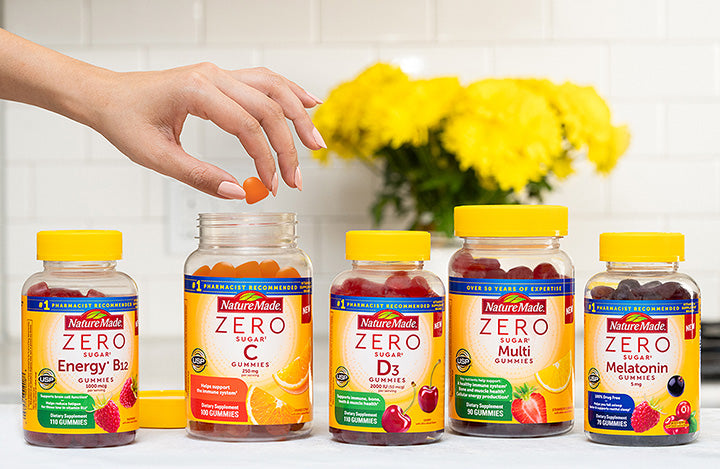
Discover how you can get the benefits you want from the nutrients you need without the sugar normally found in gummies.†
New Zero Sugar Gummies‡
Access expert insights, research, and other helpful content related to your health.
Explore Health Resources
Learn where our story began, and how we continue to evolve alongside our customers.
Discover Nature Made$0.00 away from Free Shipping You have earned Free Shipping*
Feb 11, 2026
FAQs
articles
,
Immune Health
articles
,
Vitamin C
articles
If you’re familiar with any vitamins at all, you’re probably familiar with vitamin C in its common form ascorbic acid. How could you miss it? It comes in colorful, tasty foods in our diet with citrus fruits like oranges, grapefruits, and lemons. But vitamin C is so much more than a great addition to your breakfast; it’s also an essential antioxidant that helps neutralize free radicals, and it’s an important immune support nutrient.†
Vitamin C is also a necessary component for the body’s production of collagen, which helps support healthy skin. So, where do you get this nutrient? Along with citrus fruits, vitamin C is also found in tomatoes and strawberries.†
However, despite its importance, did you know that vitamin C is one of the common nutrient shortfalls? Almost 50% of adults don’t consume enough from their daily diet.[1] However, thankfully Vitamin C deficiency, the bane of old-timey sailors, is rare in developed countries.[2] To help bridge possible nutrient gaps, many turn to dietary supplements, like Nature Made Vitamin C Gummies. But with vitamin C, is there a possibility of too much of a good thing? Let’s dig into some of the most common vitamin C questions to bring a little clarity.
Vitamin C is a water-soluble vitamin: that means it dissolves in water, not fat, and is absorbed by the body in that dissolved form. Whereas fat-soluble nutrients are stored in the body’s lipid matrices, the excess vitamin C and other water-soluble vitamins are typically excreted from the body in urine.
While the amount of vitamin C each person needs per day can vary, is there an upper limit of vitamin C that is safe to take? Vitamin C is not believed to cause serious adverse effects at high doses due to its low toxicity.[2]
But how much vitamin C is too much? The Food and Nutrition Board has established Upper Limits (UL) for vitamin C intake from both foods and supplements for those not receiving vitamin C under a physician's care. For adults aged 19 and older, the UL is 2,000 mg/day. Reaching over the Upper Limit may cause some gastrointestinal disturbances from unabsorbed vitamin C.[2]
How much vitamin C should you take per day? That can differ from person to person: our needs are different, so what one body may need can be a different amount from another. The Food and Nutrition Board has provided a helpful guide with the Recommended Dietary Allowances, or RDA, for different age groups, genders, and life stages.
So, how much vitamin C per day? For adults 19+, the Recommended Dietary Allowance of vitamin C is 90 mg/day for men, 75 mg/day for women, 85 mg/day during pregnancy and 120 mg/day during lactation. It’s also important to note that smoking affects your vitamin C needs, and individuals who smoke require 35 mg more every day than people who don’t smoke. Consulting with your primary care provider can help you find a dosage that works for you.[2]
Is taking vitamin C daily okay? Yes, and you should always follow the Suggested Use on the label of any supplement for proper dosage. Do vitamin C supplements work ? By taking a daily vitamin C supplement, you provide your body with a consistent source of this essential vitamin. Like with all supplements, consistency is important, so try to establish a regular schedule for supplementation. Consult with your primary healthcare provider for guidance if you have concerns about vitamin C supplementation.
So, what does vitamin C do for your body? As we know, vitamin C functions as an antioxidant, but what does that mean? Antioxidants work in the body by pairing off with free radicals. Free radicals are molecules with unpaired electrons that are produced during cellular processes and can ping around the body, causing what’s known as oxidative stress. By pairing them off, vitamin C neutralizes these free radicals.†
Vitamin C benefits also support a healthy immune system by supporting the function of white blood cells.[3] Vitamin C is required for the production of collagen, which is essential for skin health. Vitamin C also supports iron absorption by helping the body take in non-heme iron from plant sources.[2] Iron is, in turn, essential for the production of red blood cells. Vitamin C also plays a role in vascular health and healthy blood cell function.†
One thing Vitamin C doesn't do is give you energy , that's the role of macronutrients like carbohydrates and proteins. But if you're looking for cellular energy support, meaning vitamins that help transform food into energy your cells can use, check out our B Vitamin Supplements.†
With all the options laid out in front of you, how can you choose the right vitamin C supplement for you? First, you’ll need to be sure you’re picking a high-quality supplement from a trusted brand, one that has clearly labeled ingredients, dosages, and forms.
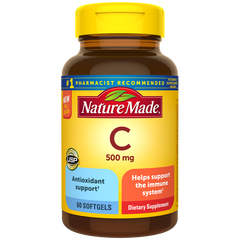
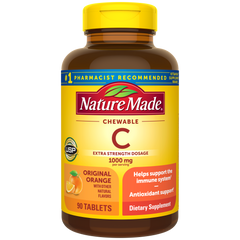
Consider whether you prefer taking supplements as tablets or gummies, and consult with your provider about the dosage that best fits your specific health goals. Nature Made Vitamin C Extra Strength Gummies provide a convenient, tasty way to get a daily dose of this essential nutrient, and Vitamin C Zero Sugar‡ Gummies provide 250 mg Vitamin C to help support your immune system without sugar.†
Many Nature Made vitamin C supplements are USP Verified: that means a third party, the United States Pharmacopeia, has tested and verified their ingredients, potency, and manufacturing process. That’s one way to know your supplement focuses on ingredients backed by science. And did we mention that Nature Made is the #1 Pharmacist Recommended Vitamin & Supplement Brand?*
"How much vitamin C should I take daily?" There's no one-size-fits-all answer for that. It’s always important to talk with a healthcare professional, doctor, or dietitian before starting any supplement routine. They can provide you with personalized guidance and explain the vitamin C benefits for men and vitamin C benefits for women.
So, can you take too much vitamin C? As long as you stay below the daily upper limit of 2000 mg. And there are plenty of benefits to vitamin C supplementation at proper dosages, including antioxidant support, immune system support, and providing one of the essential ingredients for the body’s production of collagen, a key component of skin health.†
Explore Nature Made’s Vitamin C Supplements today and take an active role in supporting your daily health.†
‡ Not a low calorie food
* Based on a survey of pharmacists who recommend branded vitamins and supplements
† These statements have not been evaluated by the Food and Drug Administration. These products are not intended to diagnose, treat, cure, or prevent any disease.
NatureMade Copywriter
Graham has a degree in film with a focus on screenwriting from the University of California, Santa Cruz. He enjoys learning new things and finding the best, most engaging way to communicate them to a wide audience. Graham appreciates simplicity in life and nutrition, and wants to find the easiest, no-stress ways to stay healthy.
Read More about Graham Morris
Science and Health Educator
Lynn is a Registered Dietitian (R.D.) and is a member of the Medical and Scientific Communications team at Pharmavite. She has over 20 years of experience in integrative and functional nutrition and has given lectures to health professionals and consumers on nutrition, dietary supplements and related health issues. Lynn frequently conducts employee trainings on various nutrition topics in addition to educating retail partners on vitamins, minerals and supplements. Lynn has previous clinical dietitian expertise in both acute and long-term care, as well as nutrition counseling for weight management, diabetes, and sports nutrition. Lynn earned a bachelor’s of science in Nutrition with a minor in Kinesiology/Exercise Science from The Pennsylvania State University. She earned a M.S. degree in Human Nutrition from Marywood University in Scranton, Pennsylvania. Lynn is an active member of the Academy of Nutrition and Dietetics, Sports Cardiovascular and Wellness Nutritionists, Dietitians in Functional Medicine, and holds a certification in Integrative and Functional Nutrition through the Academy of Nutrition and Dietetics.
Read More about Lynn M. Laboranti, RDReceive the Latest News and Special Offers