Welcome to our store
Discover which Nature Made vitamins and supplements can support your wellness goals†
Get started now.
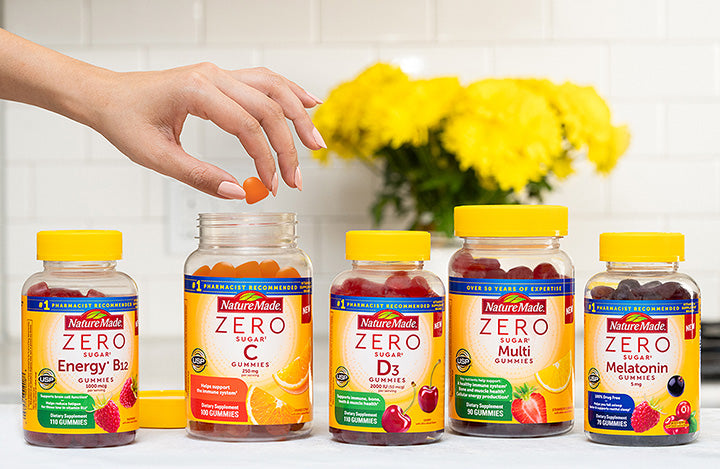
Discover how you can get the benefits you want from the nutrients you need without the sugar normally found in gummies.†
New Zero Sugar Gummies‡
Access expert insights, research, and other helpful content related to your health.
Explore Health Resources
Learn where our story began, and how we continue to evolve alongside our customers.
Discover Nature Made$0.00 away from Free Shipping You have earned Free Shipping*
May 20, 2026
General Beauty
articles
You’ve probably heard a lot about collagen and biotin lately, especially if you’ve walked into the health or beauty aisles at your local grocery store. These two nutrients both help maintain key areas of your health. But what's the difference between collagen and biotin? What are their health benefits and food sources? Is collagen or biotin better for your wellness goals?
Let’s find out about biotin vs collagen.
As a fibrous protein, collagen forms the foundation for the structure of your bone, cartilage, skin, tendon, and other connective tissue.[1] Collagen is the most abundant protein found in the human body, and it comes in 28 different types. Collagen type I is the most common, making up 90% of the collagen in the body.[1] Collagen type I forms large, strong fibers, which are a key component of connective tissue throughout our body. The body makes collagen through a process that includes vitamin C and copper-dependent enzymes.[2]
Also known as vitamin B7, biotin supports carbohydrate, protein, and fat metabolism and supports healthy hair, skin and nails. The body cannot naturally make biotin, so you must get it from the foods you eat.[3]
Though both nutrients support skin, they’re processed differently by the body. Biotin, a water-soluble B vitamin, is absorbed in the small intestine and circulates freely in the bloodstream.[4] Collagen is a large protein, and it's broken down into collagen peptides and amino acids, which are more easily absorbed forms of collagen. When we eat foods with collagen, it breaks down into amino acids in the stomach, which are then distributed through the body.[5] Let’s explore why you might be interested in adding either nutrient (or both!) to your wellness routine.
As the body’s most abundant protein, collagen plays a variety of key roles in the body. The body needs vitamin C, copper and zinc to produce collagen, and it plays a key role in skin health and bone, joint and organ function. More than two dozen types of collagen exist. Below are the most common types in the body and their health benefits: [1,2,5]
Looking for foods high in collagen and biotin? You might not have to change your diet if you find that these sources of biotin and collagen are already a familiar sight on your dinner plate. It’s always best to get the nutrients you need from food. With that in mind, look to add these collagen and biotin food sources to your diet as a way to increase your daily intake.
Collagen is found in limited food sources, which include:
While it makes sense to eat these collagen-rich foods, many people don’t eat the parts that contain the highest amounts of collagen, such as organ meats, tendons, and ligaments. To increase collagen production in the body, eat a variety of healthy foods rich in protein, vitamin C, zinc, and copper—all known to support collagen production. (Read More: Benefits of Vitamin C) [1, 5]
Most people get the biotin they need from eating a nutritious diet. If you’re looking to include more biotin-rich foods, consider organ meats like liver and whole eggs. These healthy options can also provide a daily source of biotin:[4]
Yes, you can take collagen and biotin supplements together. For instance, our Collagen Peptides Drink Mix Powder includes a clinically studied collagen blend to support healthy joints and joint comfort▲◾️ with biotin to support healthy hair, skin and nails.†
Since these nutrients serve different roles in the body, biotin as a B vitamin that helps support cellular energy production and collagen, as a structural protein, there’s no known interaction that prevents them from being taken at the same time. In fact, some supplements are formulated to contain both. Still, it's a good idea to check with your healthcare provider if you're thinking about adding one or both to your wellness routine.†
Biotin and Collagen are supplements that can be taken daily as part of a wellness routine, and many people choose to do so to support their wellness goals. Biotin is an essential B vitamin that helps support healthy hair, skin, and nails. Collagen is the most abundant protein in our bodies yet as we age, our natural collagen levels decline, so supplementing can be a convenient way to support your body from within. Like all nutrients, it's best to consult with your primary healthcare practitioner and keep in mind the potential impact on lab testing.
As stated above, everybody has different nutrient needs and wellness goals. Discuss your diet, and the benefits you are seeking, such as supporting joint health or skin health, with your doctor, and they can provide personalized guidance, including whether a collagen powder or gummy can benefit you.[6]†
Learn More: How Much Collagen Should You Take?
So, how much biotin should you take per day? For adults ages 19 and up, the recommended intake for biotin is 30 mcg a day. During lactation, this recommended intake increases to 35 mcg a day. It is always important to follow the instructions on the label of any supplement you take and discuss your diet and supplement routine with a healthcare practitioner, as some individuals will have different biotin needs.[4]
Is too much biotin and collagen bad for you? Taking biotin and collagen supplements is generally considered safe. However, consuming biotin may interfere with lab testing, so consult with your healthcare practitioner if you are taking medication or undergoing any lab testing to determine the correct course of action around biotin supplementation.[4] Always stick with the suggested use instructions printed on the product’s packaging. Talk to your health care provider if you're considering taking a biotin product like nail hair skin gummies or a collagen supplement like our Collagen Peptides + C gummies.
Not all supplements are created equal. When shopping for biotin supplements or collagen supplements, look for brands that prioritize quality and formulations with ingredients backed by science, and consult with your healthcare practitioner before adding a new supplement to your daily routine.
What's the difference between collagen and biotin? The big difference is that collagen is a protein and the body can naturally make it, while biotin is an essential vitamin that is one of the B vitamins and the body cannot naturally produce it.
Is collagen better than biotin? Well, that’s like saying is vitamin C better than calcium—both nutrients play important, but different, roles in promoting overall wellness. The same holds true for biotin and collagen. Both play important roles in the body, from supporting healthy hair, skin, and nails—and more. Getting enough of these nutrients isn’t an either/or choice. Instead of looking at it as biotin vs collagen, biotin and collagen make a good pair for most individuals looking to add a supplement to their daily routine.†
Continue to check back on the Nature Made blog for the latest science-backed articles to help you take ownership of your health.
▲In active young adults.
◾Blend consists of two collagen peptides ingredients.
References
† These statements have not been evaluated by the Food and Drug Administration. These products are not intended to diagnose, treat, cure or prevent any disease.
NatureMade Contributor
Lisa Beach is a seasoned journalist whose work has been published in The New York Times, Good Housekeeping, Eating Well, Parents, AARP’s Disrupt Aging, Optimum Wellness, and dozens more. She also writes for a variety of health/wellness-focused brands. Check out her writer’s website at www.LisaBeachWrites.com.
Read More about Lisa Beach
Science and Health Educator
Lynn is a Registered Dietitian (R.D.) and is a member of the Medical and Scientific Communications team at Pharmavite. She has over 20 years of experience in integrative and functional nutrition and has given lectures to health professionals and consumers on nutrition, dietary supplements and related health issues. Lynn frequently conducts employee trainings on various nutrition topics in addition to educating retail partners on vitamins, minerals and supplements. Lynn has previous clinical dietitian expertise in both acute and long-term care, as well as nutrition counseling for weight management, diabetes, and sports nutrition. Lynn earned a bachelor’s of science in Nutrition with a minor in Kinesiology/Exercise Science from The Pennsylvania State University. She earned a M.S. degree in Human Nutrition from Marywood University in Scranton, Pennsylvania. Lynn is an active member of the Academy of Nutrition and Dietetics, Sports Cardiovascular and Wellness Nutritionists, Dietitians in Functional Medicine, and holds a certification in Integrative and Functional Nutrition through the Academy of Nutrition and Dietetics.
Read More about Lynn M. Laboranti, RDReceive the Latest News and Special Offers