Woman in white clothing sitting with Nature Made supplements, including Zero Sugar Hair Skin Nails, Skin Hydration and Collagen, on a table top.

How to Get Healthy Skin: A Journey, Not a Destination

Oct 07, 2025 General Beauty articles Healthy Skin articles
5 MIN

Woman in white clothing sitting with Nature Made supplements, including Zero Sugar Hair Skin Nails, Skin Hydration and Collagen, on a table top.

Skin is not only our largest organ, it's also one of the few organs anyone other than surgeons get to see. That's why taking care of your skin is essential, keeping it healthy as you age so you're putting your best face forward to the world. As we get older, our skin changes. These changes are natural; collagen production slows, moisture retention decreases, and external factors like sun exposure can impact the health of our skin over time.

How to get healthy skin? Adopting a skin care routine and healthy lifestyle habits can support overall skin health and help maintain your skin's appearance. No one product can stop the march of time, but there are some practical, everyday ways to support healthy skin at any age, including using nutrition and supplements to help you put your best face forward.

1. Stay Hydrated to Keep Your Skin Hydrated

Hydration is essential for many parts of your overall wellness, so it may not be a surprise that it's also essential for taking care of your skin. Drinking an adequate amount of water helps maintain skin moisture.[1]

We're all different, and so are our hydration needs, but aiming for consistent water intake is a significant first step for keeping hydrated. Talking to your primary care provider or registered dietitian can help you figure out how much you should drink daily. Once you know how much you should drink, bringing a filled water bottle with you during your day, drinking herbal teas, and eating water-rich fruits and vegetables like cucumbers and melons can help you keep up your hydration throughout the day.

2. Protect Skin from the Sun Every Day

While the sun may be a source of much-needed light, warmth, and Vitamin D, there can be too much of a good thing. The sun emits ultraviolet rays, and unprotected UV exposure significantly contributes to premature skin aging.[2] Thankfully, many easy ways to protect your skin from these UV rays exist. A broad-spectrum sunscreen with an SPF of 30 or higher can provide vital UV protection.

Don't let the clouds fool you; remembering to apply sunscreen is important even on cloudy days to protect your skin. You can back up this sunscreen protection with protective clothing like wide-brim hats and sunglasses with UV protection. Using the environment is also helpful—there's nothing like standing in the shade of a tree to help minimize your skin's sun exposure.

3. Prioritize a Balanced Diet

A balanced diet is good for just about everything, including your skin. What are the best foods for skin? Fruits, vegetables, and nuts provide a dietary source of antioxidants, which help to neutralize free radicals that can cause oxidative stress to skin cells. Skin health nutrients like biotin and collagen can be found in egg yolks and bone broth, respectively.

If you're looking for a consistent source of skin health nutrients, supplementing with zinc, vitamin C, and biotin products can complement a balanced diet in supporting healthy skin. Check out Nature Made® Zero Sugar Hair Skin Nails Gummies, which provide 2500 mcg of Biotin to support hair health, and healthy skin and nails, plus Vitamin C & Vitamin E for antioxidant support.

4. Establish a Gentle, Consistent Skin Care Routine

It can be tempting to go a bit too hard when you want to care for your skin, but it's important to remember to treat yourself gently as you figure out how to get healthy skin. Establishing a consistent skin care routine that doesn't use harsh chemicals, but focuses on cleansing, moisturizing, and protecting your skin from the sun, is one of the best ways to care for your skin as you age.

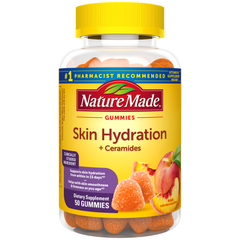
Look for hydrating ingredients in your skin care products like hyaluronic acids and ceramides in moisturizers to help support your skin's moisture and elasticity.[3] Nature Made Skin Hydration Gummies provide a clinically studied ingredient containing ceramides to support skin hydration in 15 days and help with skin smoothness & firmness as you age. Additionally, avoid over-exfoliating your skin; it can strip the skin and lead to irritation.

5. Get Enough Quality Sleep

Sleep is vital for your overall wellness; while you sleep, your skin repairs itself.[4] That's one of the many reasons you should aim for 7 to 9 hours of sleep per night; to achieve that, consider a nighttime routine that can help you support restful sleep. Try limiting your screen time before bed, instead of scrolling endlessly. A more analog solution, such as a good book, can help your brain wind down at the end of the day.

Paying attention to sleep hygiene, like creating a dark and cool sleeping environment for optimal comfort, can also help you achieve your desired restful sleep. Our Sleep Supplements can help provide occasional sleep support.

6. Manage Stress for Skin Wellness

Stress can affect our skin health, and it can make it more difficult to maintain a consistent skin care routine.[5] When we're stressed out and have everything on our mind at once, it can be easy to forget about self-care. Ensuring you take the time to de-stress and take care of your wellness is important.

Mindfulness and relaxation techniques like meditation, deep breathing, and gentle exercise like yoga and stretching can support your stress management and help you take the time to care for yourself. Skin care can be a form of relaxing self-care, helping your body and mind feel like they're being treated gently.

7. Support Skin from Within with Key Nutrients

Supplementation with key skin-health nutrients can round out a healthy skincare routine and support a nutrient-rich diet. Skin health nutrients like vitamin A, vitamin C, and biotin are available in several forms and play a role in supporting your skin. Vitamin A is essential for healthy skin, and it supports healthy aging. Vitamin C is necessary for the body to produce collagen, which helps support healthy skin. Biotin supports healthy skin and hair as you age. "How much biotin should I take?" Discuss dosage for any supplement with a trusted medical professional before adding it to your daily routine.

It might be difficult to get all the essential nutrients your body needs from food alone; supplements can help bridge the gap by providing a convenient, consistent source of essential nutrients that can be easily worked into your daily routine. Additionally, Beauty supplements are formulated with essential nutrients to support healthy skin, hair, and nails.

Embrace Healthy, Radiant Skin at Any Age

Taking care of your skin is important at any age, and taking mindful steps to support your skin's natural functions can help your skin age gracefully. Practical choices like drinking more water, making sure to apply sunscreen daily, or including more sources of skin health nutrients in your diet, as well as minor changes in your lifestyle, can form a consistent basis for skin health.

For a convenient, consistent, and practical way to support your skin, explore Nature Made Hair, Skin, & Nail products to nourish skin from within as part of a well-rounded approach. Nature Made is the #1 Pharmacist Recommended Vitamin & Supplement Brand.*


‡ Not a low calorie food

▲ For adults with dry skin

◆ Clinically Studied Wheat Seed Extract

*Based on a survey of pharmacists who recommend branded vitamins and supplements.


† These statements have not been evaluated by the Food and Drug Administration. These products are not intended to diagnose, treat, cure, or prevent any disease.


References

  1. Palma L, Marques LT, Bujan J, Rodrigues LM. Dietary water affects human skin hydration and biomechanics. Clin Cosmet Investig Dermatol. 2015;8:413-421. Published 2015 Aug 3. doi:10.2147/CCID.S86822
  2. Gromkowska-Kępka KJ, Puścion-Jakubik A, Markiewicz-Żukowska R, Socha K. The impact of ultraviolet radiation on skin photoaging - review of in vitro studies. J Cosmet Dermatol. 2021;20(11):3427-3431. doi:10.1111/jocd.14033
  3. Harwood A, Nassereddin A, Krishnamurthy K. Moisturizers. [Updated 2024 Feb 12]. In: StatPearls [Internet]. Treasure Island (FL): StatPearls Publishing; 2025 Jan-. Available from: https://www.ncbi.nlm.nih.gov/books/NBK545171/
  4. Oyetakin-White P, Suggs A, Koo B, et al. Does poor sleep quality affect skin ageing?. Clin Exp Dermatol. 2015;40(1):17-22. doi:10.1111/ced.12455
  5. Lyu F, Wu T, Bian Y, Zhu K, Xu J, Li F. Stress and its impairment of skin barrier function. Int J Dermatol. 2023;62(5):621-630. doi:10.1111/ijd.16598

Authors

Graham Morris

NatureMade Copywriter

Graham has a degree in film with a focus on screenwriting from the University of California, Santa Cruz. He enjoys learning new things and finding the best, most engaging way to communicate them to a wide audience. Graham appreciates simplicity in life and nutrition, and wants to find the easiest, no-stress ways to stay healthy.

Read More about Graham Morris

Kalyn Williams, RDN

Science and Health Educator

Kalyn is a Registered Dietitian-Nutritionist and a Science & Health Educator with the Medical and Scientific Communications team at Pharmavite. Her experience in the field of nutrition prior to joining Pharmavite has included community and public health education, media dietetics, and clinical practice in the areas of disordered eating, diabetes, women’s health, and general wellness. Kalyn received her Bachelor of Science degree in Nutrition and Dietetics from Arizona State University in Phoenix, Arizona, and completed her dietetic supervised practice in Maricopa County, AZ, with an emphasis on public health. Kalyn is certified in Integrative and Functional Nutrition through the Academy of Nutrition and Dietetics, where she is an active member in addition to memberships in Dietitians in Functional Medicine, Women’s Health Dietitians, and the International Federation of Eating Disorder Dietitians.

Read More about Kalyn Williams, RDN