Welcome to our store
Discover which Nature Made vitamins and supplements can support your wellness goals†
Get started now.
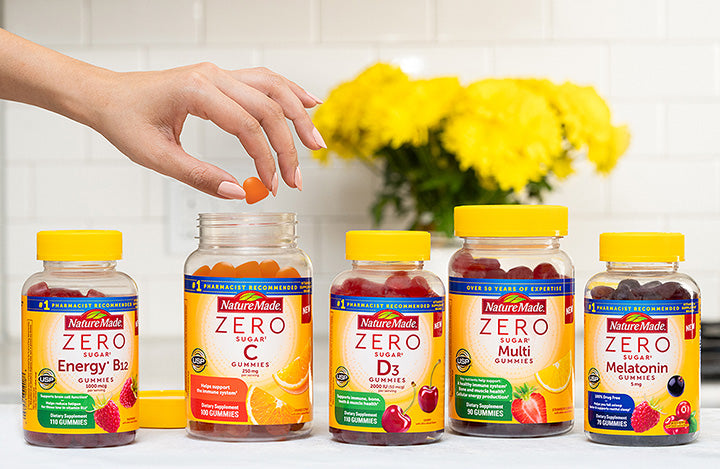
Discover how you can get the benefits you want from the nutrients you need without the sugar normally found in gummies.†
New Zero Sugar Gummies‡
Access expert insights, research, and other helpful content related to your health.
Explore Health Resources
Learn where our story began, and how we continue to evolve alongside our customers.
Discover Nature Made$0.00 away from Free Shipping You have earned Free Shipping*
Feb 25, 2026
FAQs
articles
,
Vitamin E
articles
You might be aware of the benefits of vitamin E, an essential nutrient that functions as an antioxidant and supports skin health and healthy aging. But you’re not alone in asking the question: how much vitamin E should I take? With plenty of supplement options available, it can become difficult to know how much vitamin E is too much or how little is too little.†
Thankfully, you’ve already taken the right step by asking the question! In this article, we’ll explore your daily vitamin E needs, how you get vitamin E from food sources versus vitamin E supplements, and tips on how to choose the right amount of vitamin E for you based on your lifestyle and dietary habits. Here’s what our science and nutrition experts say about how much vitamin E your body may need each day.
Before deciding how much Vitamin E to take per day, it helps to understand what it does for your body. Vitamin E is an essential vitamin, one of the nutrients that our body can’t produce internally, so we need to get it from eating vitamin E food sources, or supplements. What does vitamin E do for your body? It’s an antioxidant that supports healthy skin, immune health, and healthy aging. Vitamin E is fat-soluble, which means it requires some sort of dietary fat in order to be dissolved and absorbed by the body.†
Vitamin E works alongside vitamin C as an antioxidant, pairing off with free radicals (ions with unpaired electrons) to protect our cells from oxidative stress.[1] It’s present in the skin’s inner and outer layers, and is key to supporting our skin health as we age. While vitamin E is found in some foods, such as almonds, avocados, and peanut butter, 84% of adults have a dietary shortfall in vitamin E.[2] That’s why it’s not uncommon to look for vitamin E supplementation to help bridge this dietary shortfall and meet daily needs.†
“How much vitamin E should I take?” is a common refrain when exploring the supplement aisles at your local market. You’ll find that daily supplements come in different forms and dosages, and understanding how much vitamin E each one provides can help you make an informed decision when picking a supplement. To help you pick, it’s important to understand the recommended dietary allowance of vitamin E for adults, as established by the Food and Nutrition Board.
A good baseline for how much vitamin E per day is the Recommended Dietary Allowance, which is set by the Food and Nutrition Board to help assess the regular nutrient intakes of healthy people. These recommendations can vary by age, gender, and life stage. For vitamin E, the RDA for adults is 15 mg, increasing to 19 mg during lactation.[3]
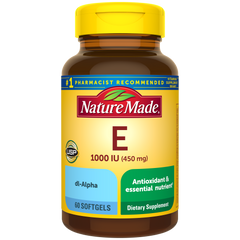
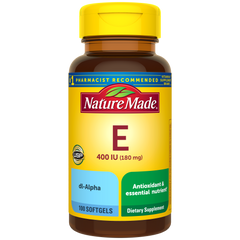
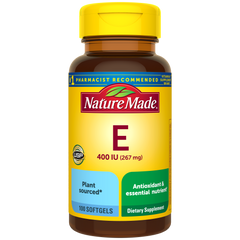
There are two major types of vitamin E found in supplements: dl-Alpha and d-Alpha. Vitamin E dl-Alpha is the synthetic form, while d-Alpha is the more bioavailable form. Vitamin E supplements often list the dosage in IU (International Units) and mg to help convey differences in biological activity between forms.
While the daily value and the RDA are good general guides for your vitamin E intake, individual needs may vary based on diet, age, and lifestyle. Ask your doctor or a trusted healthcare professional "how much vitamin E should I take?" for personalized guidance.
If you’re looking for vitamin E supplementation, explore Nature Made’s Vitamin E collection. We offer a number of supplements to help you fit your wellness goals and preferences.
Always be sure to discuss any health conditions or medications that may interact with supplementation.†
As with all nutrients, the best way to get vitamin E is through a balanced diet made up of nutrient-rich foods. Thankfully, many dietary sources of vitamin E are pretty tasty. Sources of vitamin E include almonds, sunflower seeds, spinach, avocado, sunflower oil, safflower oil, and peanut butter.[3]
While these may not be full meals on their own, it’s easy to include these sources of vitamin E as a flavor pop and garnish to your meals: try drizzling some sunflower oil and adding sliced avocado to your next salad, or substitute almonds as a midday snack instead of sugary candy.
While you should look for dietary sources of vitamin E, supplementation may be worth considering if dietary intake is inconsistent or limited. In fact, approximately 84% of the U.S. population has an inadequate daily intake of Vitamin E in their diet.[2] A daily vitamin E supplement can help adults address this dietary shortfall.
While many sources of vitamin E are nutrient-dense, nuts and oils are often high in calories and dietary fats. Those who are limiting these foods may find vitamin E supplementation a smart addition to their daily routine, helping address a nutrient shortfall that may arise from a calorie- or fat-restricted diet.
It’s important to speak with your healthcare provider about a balanced diet, and about adding supplementation to your routine, as everyone’s individual needs are different. Always remember that supplements complement a balanced diet; they do not replace it.
Can you take too much vitamin E? Yes, research has established a tolerable upper intake level (UL) for vitamin E from supplements. The UL of vitamin E for adults is 1,000 mg/day, which equals 1,500 IU/day of d-Alpha or 1,100 IU/day of dl-Alpha.[3] The UL is a general guideline for healthy people. The upper limit is unlikely to be reached through diet alone, but it’s recommended to consult a doctor before starting any new supplement and to always follow the Suggested Use on the supplement label.
Vitamin E is a fat-soluble vitamin, which means it should be taken with a meal containing a dietary fat, such as oil or butter. Pairing your daily supplement routine with a regular meal, like breakfast or dinner, helps ensure you take fat-soluble supplements alongside dietary fat and maintain consistency by integrating into an existing routine.
Nature Made’s best vitamin E supplement for you may hinge on a number of factors. Consider your daily diet: do you regularly consume dietary sources of vitamin E? Also, consider your other supplements; vitamin E is commonly included in multivitamins for its antioxidant, immune, and healthy aging support.†
Discuss whether vitamin E may be a beneficial addition to your routine with your doctor. Nature Made supplements are made with high-quality ingredients backed by science, making them a reliable choice for those looking for skin and immune support.†
Considering vitamin E supplementation? This vital nutrient supports healthy aging and healthy skin and plays an essential role in the functions of many cells, including heart cells. It’s important to educate yourself before embarking on a supplement routine: consult with a healthcare provider to determine how much vitamin E per day will help you make an informed choice about form and dosage.†
Explore our Vitamin E Collection and Beauty Supplements today to find nutrients and vitamins for skin health and more!
† These statements have not been evaluated by the Food and Drug Administration. These products are not intended to diagnose, treat, cure or prevent any disease.
NatureMade Copywriter
Graham has a degree in film with a focus on screenwriting from the University of California, Santa Cruz. He enjoys learning new things and finding the best, most engaging way to communicate them to a wide audience. Graham appreciates simplicity in life and nutrition, and wants to find the easiest, no-stress ways to stay healthy.
Read More about Graham Morris
Science and Health Educator
Kalyn is a Registered Dietitian-Nutritionist and a Science & Health Educator with the Medical and Scientific Communications team at Pharmavite. Her experience in the field of nutrition prior to joining Pharmavite has included community and public health education, media dietetics, and clinical practice in the areas of disordered eating, diabetes, women’s health, and general wellness. Kalyn received her Bachelor of Science degree in Nutrition and Dietetics from Arizona State University in Phoenix, Arizona, and completed her dietetic supervised practice in Maricopa County, AZ, with an emphasis on public health. Kalyn is certified in Integrative and Functional Nutrition through the Academy of Nutrition and Dietetics, where she is an active member in addition to memberships in Dietitians in Functional Medicine, Women’s Health Dietitians, and the International Federation of Eating Disorder Dietitians.
Read More about Kalyn Williams, RDNReceive the Latest News and Special Offers