Guide to Minerals: Calcium, Magnesium and More

Guide to Minerals: Calcium, Magnesium and More

Dec 09, 2025 Bone Health articles
7 MIN

Guide to Minerals: Calcium, Magnesium and More

Vitamins and minerals, also known as micronutrients, are essential to the proper function of our body. Micronutrients are just as important as the macronutrients (carbohydrates, protein, and fat) that we consume for energy in our diet. However, vitamins and minerals are needed in much lesser amounts than the carbohydrates, fats, and proteins we eat. We require some minerals in higher amounts (macro minerals) than others (trace minerals). Minerals (and also vitamins) are the support - the ‘brick and mortar’ – our body needs to help carry out various body processes.

Vitamins are chemically organic substances that come from plants and animals. Minerals are chemically inorganic substances coming from the soil and water, which are then absorbed by plants, which are in turn eaten by animals. As humans, we absorb the minerals our bodies need from the plant and animal foods we consume. Essential minerals include calcium, magnesium, zinc and more.

What is Calcium?

Calcium is the most abundant mineral in the body and is found primarily in the skeleton, where it helps build and support bones and teeth.[1]

Adequate calcium throughout life, as part of a well-balanced diet, may reduce the risk of osteoporosis. Calcium is an essential mineral that supports healthy bone development. Despite its importance, 43% of American adults have dietary calcium intake below the estimated average requirements.[2] Adults aged 19-50 are recommended to get 1,000 mg per day, whether through diet or supplementation. For women aged 51 and up, that recommendation increases to 1,200 mg per day. All adults aged 71 and up are recommended to get 1,200 mg per day.[1]

Where might you get calcium? Food sources of this essential mineral include milk, yogurt, cheese, legumes, and green vegetables like broccoli and kale, and fortified orange juice.[1] However, as stated above, many Americans don't get enough calcium from diet alone.[2] Calcium supplements can help address this dietary shortfall.

Most Nature Made Calcium Supplements provide this mineral in calcium carbonate form derived from limestone. For proper absorption, take calcium daily with water and a meal. Many calcium supplements come with vitamin D, like our Calcium with Vitamin D3 Softgels. That's because vitamin D helps improve calcium absorption, so these two essential nutrients work together well. Consult with a healthcare professional to choose a dietary calcium supplement that best meets your individual needs.

What is Magnesium?

Are you getting enough dietary intake of magnesium? Magnesium is an essential mineral that supports essential nerve and muscle function and supports bone and teeth health. Magnesium assists in transporting calcium and potassium ions across cell membranes, which is essential for nerve impulse conduction and muscle contraction.[3] Magnesium is also involved in over 300 essential metabolic functions, making this mineral a key player in cellular energy metabolism.

Incorporating daily calcium and magnesium supplements in your daily routine can help support several different cellular functions. Some key benefits from adequate magnesium intake include:

Cellular Energy Production

Magnesium is necessary to convert the food we eat into cellular energy. Magnesium is required by cells to produce ATP (adenosine triphosphate), the body’s main source of energy.[4] While magnesium can help fuel your body, it's not the only essential nutrient for cellular energy production. Explore our cellular energy supplements to better understand what nutrients our body uses to power our cells.

Muscle & Nerve Health

Magnesium is involved in more than 300 enzymatic reactions in the body, including those that support proper muscle and nerve function.[3] How much magnesium should you get per day? That depends on your age, gender and life stage. Here is the Recommended Dietary Allowance for adults[3]:


Age Male Female Pregnancy Lactation
19–30 years 400 mg 310 mg 350 mg 310 mg
31–50 years 420 mg 320 mg 360 mg 320 mg
51+ years 420 mg 320 mg


Where do you find magnesium in your diet? Food sources of magnesium include whole grains (brown rice, oat bran, whole wheat), dark green leafy vegetables, nuts, and beans.

Unfortunately, 54% of American adults do not consume an adequate amount of this mineral.[2] If you do not consume enough of these magnesium-rich foods, a supplement may be beneficial. In either case, it’s always best to talk to your health care professional to determine if magnesium fits into your daily supplement regimen.

Nature Made offers a variety of calcium and magnesium supplements in a variety of forms, including tablets, softgels and more. Nature Made High Absorption Magnesium Complex Soft Chews provide a tasty way to get your magnesium on the go, with a blend of magnesium citrate and magnesium malate to support muscle relaxation, heart, nerve & bone health.

Learn More: Do Gummy Vitamins Work?

Can You Take Calcium and Magnesium Together?

Yes, calcium and magnesium can be taken together. These two minerals support many of the same functions in the body, especially when it comes to bone health, muscle function, and nerve signaling. In fact, calcium and magnesium play key roles in contraction and relaxation in muscle cells.[5]†

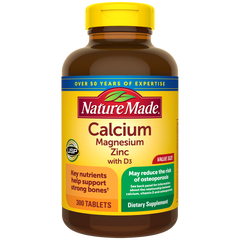
Because both nutrients can help support bone health, Nature Made’s offers supplements that include both calcium and magnesium, like our Calcium, Magnesium and Zinc with Vitamin D3 Tablets, which provide key nutrients that help support strong bones. Always follow the suggested use, and consult with your primary healthcare practitioner before starting or changing a supplement routine, they can help you with personalized guidance.

What is Potassium?

Potassium, another key mineral, is present in all body tissue and helps maintain the balance and distribution of fluids in the body, making it required for normal cellular function.[6]. The recommended intake for potassium is 3,400 mg per day for adult men, and 2,600 mg per day for adult women, increasing to 2,900 mg per day during pregnancy and 2,800 mg per day during lactation.[6] Good food sources are fruits and vegetables like bananas, potatoes, citrus, tomatoes, prunes and spinach. Nature Made offers Potassium Gluconate Tablets to support heart function, along with nerve and muscle function.

What is Iron?

Iron, one of the trace minerals, is vital for red blood cell formation and has a central role in transporting oxygen in the body. Iron is especially important for women in their reproductive years, as prevalence of iron deficiency is highest between ages 18 and 50.[7] The recommended intake for iron is 8 mg per day for adult males, and 18 mg per day for adult females (ages 19-50), which increases to 27 mg per day during pregnancy, and 9 mg per day during lactation. Adult females ages 51 and up are recommended to get 8 mg of iron per day.[8] Iron comes in two forms, heme and non-heme iron. Heme iron is found in animal sources, and is better absorbed by the body. Non-heme iron is found in plant sources; vitamin C helps the body increase absorption of non-heme iron from plant sources.[8] Food sources of heme iron in the diet include lean meat and seafood. Dietary sources of non-heme iron include nuts, beans, vegetables, and fortified grain products.

What is Zinc?

Zinc is a trace mineral that plays a role in normal growth and development, immune function, and is needed as a catalyst for hundreds of enzymes.[9]

The recommended daily intake for zinc is 11 mg for adult males and 8 mg for adult (non-pregnant) females. Pregnant and lactating adult women require 11 mg/day and 12 mg/day of zinc, respectively.[9] Food sources of zinc include oyster, crab, turkey, as well as yogurt, milk, beans, nuts and fortified breakfast cereals. Older adults, vegetarians, vegans, and pregnant and lactating women may have inadequate zinc intake from their daily diet.[2] A daily zinc supplement can help to bridge nutrient gaps if your diet does not include adequate sources of zinc.

How Minerals Work Together

Vitamins and minerals don’t work alone. For example, calcium and magnesium and zinc help support strong bones, among other benefits. Exploring supplement blends that package nutrients into a convenient daily form can help to simplify your supplement routine, with ingredients backed by science.

Everyone’s routine is different, and so are supplement options. Soft chews are great if you want something convenient and tasty on the go. Others prefer tablets and softgels as part of their daily routine. Some people prefer single-ingredient supplements, while others prefer to approach their routine with a multivitamin, combining several nutrients in a convenient package. Consult with your primary healthcare practitioner and consider your and personal wellness goals for guidance choosing the right Nature Made supplement for you.

Filling Nutritional Gaps

All of the minerals listed in this guide are essential for supporting your overall health.

The best way to get essential minerals is by supporting your body with a balanced diet full of nutrient-dense foods. However, if you’re looking to bridge some nutritional gaps in your diet, explore Nature Made supplements. Check out our gummy, tablet, or softgel products, including our calcium magnesium supplement, to help get the nutrients you may need today!

◆Magnesium Citrate is better absorbed than Magnesium Oxide.


These statements have not been evaluated by the Food and Drug Administration. These products are not intended to diagnose, treat, cure, or prevent any disease.


References

  1. National Institutes of Health. Calcium. National Institutes of Health Office of Dietary Supplements. Published 2024. https://ods.od.nih.gov/factsheets/Calcium-HealthProfessional/
  2. Reider CA, et al. Inadequacy of Immune Health Nutrients: Intakes in US Adults, the 2005-2016 NHANES. Nutrients. 2020 Jun 10;12(6):1735.
  3. National Institutes of Health. Magnesium. National Institutes of Health. Published 2022. https://ods.od.nih.gov/factsheets/Magnesium-HealthProfessional/
  4. Barbagallo M, Veronese N, Dominguez LJ. Magnesium-An Ion with Multiple Invaluable Actions, Often Insufficiently Supplied: From In Vitro to Clinical Research. Nutrients. 2023;15(14):3135. Published 2023 Jul 13. doi:10.3390/nu15143135 
  5. Yu E, Sharma S. Physiology, Calcium. [Updated 2023 Aug 14]. In: StatPearls [Internet]. Treasure Island (FL): StatPearls Publishing; 2025 Jan-. Available from: https://www.ncbi.nlm.nih.gov/books/NBK482128/
  6. National Institutes of Health. Office of Dietary Supplements - Potassium. Nih.gov. Published June 2, 2022. https://ods.od.nih.gov/factsheets/Potassium-HealthProfessional/
  7. Tawfik YMK, Billingsley H, Bhatt AS, et al. Absolute and Functional Iron Deficiency in the US, 2017-2020. JAMA Netw Open. 2024;7(9):e2433126. Published 2024 Sep 3. doi:10.1001/jamanetworkopen.2024.33126
  8. National Institutes of Health. Iron: Fact Sheet for Health Professionals. National Institutes of Health. Published October 9, 2024. https://ods.od.nih.gov/factsheets/Iron-HealthProfessional
  9. National Institutes of Health. Zinc. Nih.gov. Published September 28, 2022. https://ods.od.nih.gov/factsheets/Zinc-HealthProfessional/

Authors

Graham Morris

NatureMade Copywriter

Graham has a degree in film with a focus on screenwriting from the University of California, Santa Cruz. He enjoys learning new things and finding the best, most engaging way to communicate them to a wide audience. Graham appreciates simplicity in life and nutrition, and wants to find the easiest, no-stress ways to stay healthy.

Read More about Graham Morris

Sandra Zagorin, MS, RD

Science and Health Educator

As a member of the Medical and Scientific Communications team, Sandra educates healthcare professionals and consumers on nutrition, supplements, and related health concerns. Prior to joining Pharmavite, Sandra worked as a clinical dietitian at University of Chicago Medicine in the inpatient and outpatient settings. Sandra received her Bachelor of Science degree in Nutritional Science, with minors in Spanish and Chemistry from the University of Arizona in Tucson, AZ. She earned her Master of Science degree in Clinical Nutrition from RUSH University in Chicago, IL. As part of her Master’s program, Sandra performed research on physical activity participation and correlates in urban Hispanic women.

Read More about Sandra Zagorin, MS, RD

Kalyn Williams, RDN

Science and Health Educator

Kalyn is a Registered Dietitian-Nutritionist and a Science & Health Educator with the Medical and Scientific Communications team at Pharmavite. Her experience in the field of nutrition prior to joining Pharmavite has included community and public health education, media dietetics, and clinical practice in the areas of disordered eating, diabetes, women’s health, and general wellness. Kalyn received her Bachelor of Science degree in Nutrition and Dietetics from Arizona State University in Phoenix, Arizona, and completed her dietetic supervised practice in Maricopa County, AZ, with an emphasis on public health. Kalyn is certified in Integrative and Functional Nutrition through the Academy of Nutrition and Dietetics, where she is an active member in addition to memberships in Dietitians in Functional Medicine, Women’s Health Dietitians, and the International Federation of Eating Disorder Dietitians.

Read More about Kalyn Williams, RDN