Magnesium 300 mg + Ashwagandha 125 mg Capsules on a night stand next to a lamp.

Are Sleep Aid Supplements Safe for Occasional Use? Frequency & Dosage Recommendations

May 31, 2026 Melatonin articles Sleep Tips articles
5 MIN

Magnesium 300 mg + Ashwagandha 125 mg Capsules on a night stand next to a lamp.

We've all been there: you're trying to sleep before a big presentation or a big trip, and you feel like you need some extra sleep support. It's not uncommon to look for support in this situation, and occasional sleep support supplements can help ease your transition to sleep. But if you are looking for regular sleep support, you may want to know the safety of melatonin, and whether dietary supplement sleep aids are safe and effective for regular use.

The most important thing to know is always to use sleep aid supplements as directed and understand they are intended for occasional use only (not regular use). Let's address some of the most common questions about dietary supplement sleep aids for occasional use and help you find sleep support options that might fit your needs. If you are interested in information on nonprescription and prescription sleep medications, please talk to a trusted source of medical advice like your doctor or pharmacist.

Dosage Guidelines for Effective Use

If you are beginning to use sleep aid supplements, always consult your primary health care provider and follow their advice. They may recommend a sleep aid supplement for occasional support or other methods to help you sleep. Nature Made® includes dosage instructions on every one of our sleep support products, like melatonin and ashwagandha. Melatonin is a hormone produced in the brain that helps to regulate sleep and wake cycles. Melatonin is also available as a dietary supplement that can help support sleep by augmenting your body’s natural melatonin production.

Melatonin Supplements are for occasional use and come in varying dosages; always follow the Suggested Use on the label to make sure you are taking the intended dose. It is generally recommended to take the lowest dose and to talk with your healthcare practitioner about how much melatonin is right for you.

Nature Made Magnesium + Ashwagandha Capsules help relax your body with a daily dose of magnesium, plus clinically studied Sensoril® ashwagandha to reduce stress and cortisol levels, and support sleep quality with continued use.

Is It Okay to Take a Sleep Aid Supplement Every Night?

Nature Made sleep aid supplements are safe when taken as directed and subject to any caution or warning statement on the label. Our dietary supplement sleep aids are intended for occasional use. Make sure to follow the Suggested Use as listed on the bottle.

Some sleep supplements are adaptogens, like ashwagandha, which work with continued use over time. For example, our Magnesium + Ashwagandha Capsules include clinically studied Sensoril® ashwagandha, which supports sleep quality with continued use, and should be taken daily with water.

If you are looking for more immediate sleep support, say you are having trouble sleeping before an early morning meeting, melatonin may be a more suitable choice. Nature Made Extended Release Melatonin Tablets release melatonin both immediately and throughout the night; time-release melatonin has been clinically studied to raise Melatonin levels in as little as 15 minutes and sustain Melatonin levels for 6 hours.[1]†

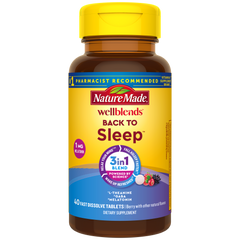
Check out our Melatonin Collection to find the right option for you, with both immediate and extended-release formulas, as well as different forms such as Wellblends™ Back to Sleep™ Fast Dissolve Tablets or Melatonin Maximum Strength Tablets.

For those looking for additional relaxation support alongside sleep, Nature Made Melatonin + Magnesium Sleep and Relax Gummies provide a 3 mg dose of melatonin to help you fall asleep faster and wake refreshed, plus magnesium to help relax your body in non-habit forming, strawberry-flavored gummies.

Complementary Practices for Better Sleep

Sleep is important because it is the time that your body rests and repairs itself. You can make some simple lifestyle changes to improve your sleep hygiene. Here are just a few!

Create a Restful Environment

Creating a restful sleep environment can be a great benefit to your sleep. Next time you get ready for bed, take some time to think about where all the light sources are in your room. Could blackout curtains help? Try dimming your lights an hour or two before you sleep, easing yourself into bedtime.

Keeping the right temperature can also help support your sleep. Find the right combination of blankets and fans for the ideal comfortable temperature. Keeping a consistent routine every night sends a signal to our brains that the day is winding down, making it easier to make that transition into sleep.

Limit Screen Time Before Bed

Did you know that blue light can inhibit melatonin production?[2] During the day, we receive blue light from the sky outside, which is all good: it helps our brains know not to make us tired when the sun is out.

But with the modern world comes modern problems. The screens we use daily, including computers and phones, also emit blue light, which can inhibit the production of melatonin when we’re using them, which is not so great when we’re trying to prepare for our nightly rest.

One way to support sleep quality is by turning off screens an hour or two before bedtime. When you cozy up in bed, try reaching for a book instead of social media to lull you to sleep. Some LED light bulbs emit blue light; replacing these with warmer tones can help, too!

Mindfulness and Relaxation Techniques

One way to help slow down before bedtime is through relaxation and mindfulness techniques. If you're new to meditation, try following a guided meditation audio to help you relax your mind and body. You can also combine relaxation with exercise by doing gentle, calming yoga before bed to help stretch and relax your limbs and shed some of the day's anxieties.

Regular Exercise Routine

A short walk around the neighborhood, calming yoga, or gentle stretching are all ways to exercise before bed without worrying about adrenaline keeping you up. Regular exercise throughout the day can help support your sleep schedule, along with many other benefits, so adding an exercise routine to your day is a great way to support your night!

A balanced approach to sleep is always best. Try out a few of these lifestyle adjustments to help ease your journey into bed; sleep hygiene, exercise, and relaxation techniques are great first steps for sleep support. Occasional and safe use of dietary supplement sleeping aids can work in conjunction with these sleep-friendly tips to support a healthy sleep cycle.

Your Path to Restful Sleep

Remember: always follow the Suggested Use on the label for any dietary supplement sleep aid you use, whether it is our Magnesium + Ashwagandha Capsules, Melatonin, or any other sleep support supplement. Consult with a health care provider before deciding to use a sleep aid supplement; a trusted source like your primary care provider is best equipped to give you personalized advice on how to support your sleep through lifestyle changes, diet changes, or occasional sleep support supplementation.

Many Nature Made supplements, like our Zero Sugar Melatonin Extra Strength Gummies, are USP verified, meaning their ingredients, potency and manufacturing process have been tested and verified by a third party. Nature Made is the #1 Pharmacist Recommended Vitamins & Supplements Brand.*


SENSORIL® is protected under U.S. Patent No. 7,318,938 and CA Patent No. 2,508,478, and is a registered trademark of Natreon, Inc.

‡ Not a low calorie food

* Based on a survey of pharmacists who recommend branded vitamins and supplements


References:

  1. Mun, J. G., Wang, D., Doerflein Fulk, D. L., Fakhary, M., Gualco, S. J., Grant, R. W., & Mitmesser, S. H. (2023). A Randomized, Double-Blind, Crossover Study to Investigate the Pharmacokinetics of Extended-Release Melatonin Compared to Immediate-Release Melatonin in Healthy Adults. Journal of Dietary Supplements, 21(2), 182–194. https://doi.org/10.1080/19390211.2023.2206475
  2. Helena L, Maria Nathália Moraes, Maristela, José Cipolla Neto, Baron J, Mota T. Modeling the influence of nighttime light on melatonin suppression in humans: milestones and perspectives. Journal of Photochemistry and Photobiology. 2023;16:100199-100199. doi:https://doi.org/10.1016/j.jpap.2023.100199

† These statements have not been evaluated by the Food and Drug Administration. These products are not intended to diagnose, treat, cure or prevent any disease.

Authors

Graham Morris

NatureMade Copywriter

Graham has a degree in film with a focus on screenwriting from the University of California, Santa Cruz. He enjoys learning new things and finding the best, most engaging way to communicate them to a wide audience. Graham appreciates simplicity in life and nutrition, and wants to find the easiest, no-stress ways to stay healthy.

Read More about Graham Morris

Lynn M. Laboranti, RD

Science and Health Educator

Lynn is a Registered Dietitian (R.D.) and is a member of the Medical and Scientific Communications team at Pharmavite. She has over 20 years of experience in integrative and functional nutrition and has given lectures to health professionals and consumers on nutrition, dietary supplements and related health issues. Lynn frequently conducts employee trainings on various nutrition topics in addition to educating retail partners on vitamins, minerals and supplements. Lynn has previous clinical dietitian expertise in both acute and long-term care, as well as nutrition counseling for weight management, diabetes, and sports nutrition. Lynn earned a bachelor’s of science in Nutrition with a minor in Kinesiology/Exercise Science from The Pennsylvania State University. She earned a M.S. degree in Human Nutrition from Marywood University in Scranton, Pennsylvania. Lynn is an active member of the Academy of Nutrition and Dietetics, Sports Cardiovascular and Wellness Nutritionists, Dietitians in Functional Medicine, and holds a certification in Integrative and Functional Nutrition through the Academy of Nutrition and Dietetics.

Read More about Lynn M. Laboranti, RD