Welcome to our store
Discover which Nature Made vitamins and supplements can support your wellness goals†
Get started now.
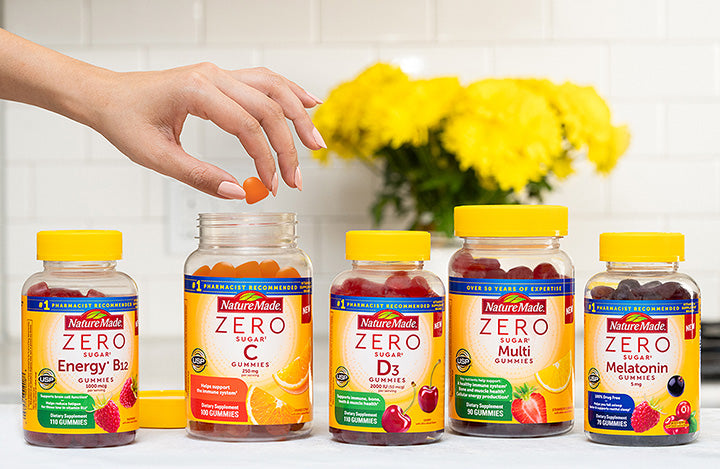
Discover how you can get the benefits you want from the nutrients you need without the sugar normally found in gummies.†
New Zero Sugar Gummies‡
Access expert insights, research, and other helpful content related to your health.
Explore Health Resources
Learn where our story began, and how we continue to evolve alongside our customers.
Discover Nature Made$0.00 away from Free Shipping You have earned Free Shipping*
Mar 23, 2026
FAQs
articles
,
Lifestyle Tips
articles
One of the most common questions about vitamins is, "What vitamins should I take every day?" This answer will be different for everyone, but we do have some guidelines and recommendations of what to look for when determining your daily vitamin routine!
Top on our list of recommended daily vitamins is the mighty multivitamin! Multivitamins provide essential vitamins and minerals that help you meet your daily nutritional needs. A multivitamin also provides vital nutrients for foundational support for immune, muscle, and bone health. Nature Made® multis are specially formulated with age, gender, and life stage in mind. Look for gender- and age-specific formulations to help meet your needs, such as our Women's Multivitamin 50+ Softgels or Multi for Him Gummies.
Multivitamins are filled with many vitamins you might miss in your daily diet.[1] Here are some common vitamins found in multivitamins and what they can do for you!
B Vitamins are a group of vitamins that all support our cellular energy metabolism and support a healthy brain and nervous system, and they each have their individual benefits, too! Vitamin B5, or Pantothenic Acid, supports healthy adrenal function and the body’s response to stress. Vitamin B6 supports the production of neurotransmitters needed for mood health.†
Vitamin B6 and Folic Acid (or Folate in food sources), are both important for proper red blood cell formation and supporting the production of neurotransmitters. Vitamin B12 is also important for proper red blood cell formation and necessary for normal nervous system function; it is an essential supplement if you're vegetarian or vegan because you may not get enough from your diet alone since B12 is found mainly in animal foods.†
Many multivitamins you'll find include Vitamin A, and for good reason! It helps support a healthy immune system and is essential for healthy eye function. Vitamin A is also a skin health nutrient! Vitamin A can be found in high amounts in liver, fish, and eggs. Plant sources of Vitamin A (as beta-carotene) are leafy green vegetables & orange and yellow fruits and vegetables, like sweet potato, tomatoes, carrots, and cantaloupe. Vitamin A is added to some foods, including fortified milk and some ready-to-eat cereals.†
Good food sources of Vitamin E include wheat germ, seeds, nuts and nut butters, like peanut butter. It can also be found naturally in some seafood and in smaller amounts in some fruits and vegetables, such as avocado. A multivitamin is a good alternative source of this essential nutrient. Vitamin E is an antioxidant that supports a healthy immune system and neutralizes free radicals in the body.†
Vitamin K is a fat-soluble vitamin most commonly found in the diet as Vitamin K1 (in plant foods like leafy green vegetables and dark berries) and Vitamin K2 (in fermented foods and animal products). Vitamin K1 supports healthy vascular function and a healthy circulatory system. Vitamin K2 works with Calcium in your body to support healthy bones. Most multis provide a source of Vitamin K1. Additionally, some supplements combine Vitamin K2 with Vitamin D3 since these two vitamins work together to support strong, healthy bones.†
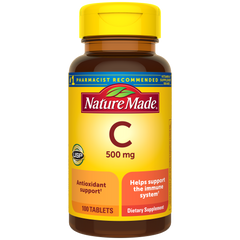
Vitamin C is not only an antioxidant that supports your immune system, but it also increases iron absorption from food and is needed for collagen synthesis to support overall skin health. Almost ½ of U.S adults don’t get enough Vitamin C from their daily diets, so you can easily supplement this vital nutrient in a multivitamin or a Vitamin C supplement.[1] If you're exploring different types of Vitamin C, such as Ascorbic Acid or Sodium Ascorbate, look for a format that best fits your needs and is easy to tolerate.†
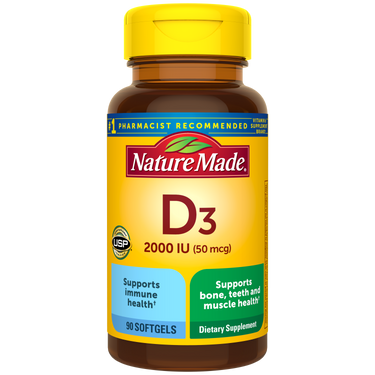
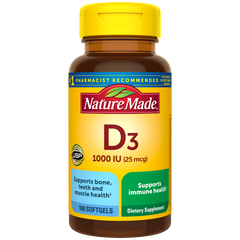
So, what is Vitamin D? Many multivitamins include Vitamin D, an essential vitamin supporting the body's natural immune defenses and bone, teeth, and muscle health! Our bodies naturally produce Vitamin D when exposed to the sun. Getting fifteen minutes of sunlight every day (without sunscreen) will produce some vitamin D through our skin, although most adults do not produce enough due to various factors.†
Very few foods provide Vitamin D, and studies show that 95% of Americans do not get enough Vitamin D through diet alone![1] If you are interested in additional Vitamin D supplementation, it's essential to have your levels tested by a healthcare provider to determine the correct dosing; Nature Made® offers a variety of Vitamin D Supplements to meet your needs!†
Many multis provide 100% or more of the daily value for multiple nutrients. However, some nutrients, including minerals like Calcium or Magnesium, may not be found in all multivitamins. Meeting 100% of your daily needs for these nutrients should be done through your diet or additional supplements like Nature Made® Calcium, Magnesium, and Zinc with Vitamin D3 Tablets.†
Your body uses Iron to produce hemoglobin (an essential protein found in red blood cells), enabling red blood cells to carry oxygen throughout the body. If you are a woman under 50, you should consider taking a multivitamin with Iron; it's an essential nutrient for women in their reproductive years.†
Calcium is essential to supporting our strong bones as we age! Women tend to have lower bone density than men and may want to consider supplementing their Calcium intake to support and maintain bone strength.†
Magnesium is an essential mineral necessary for more than 300 enzyme reactions in the body! Nearly 54% of Americans need to get more Magnesium in their diets.[1] Magnesium has a variety of functions, supporting muscle relaxation and nerve, heart, and bone health.†
Along with vitamins and minerals, Nature Made offers a variety of supplements with other benefits that may be a great addition to your daily routine.
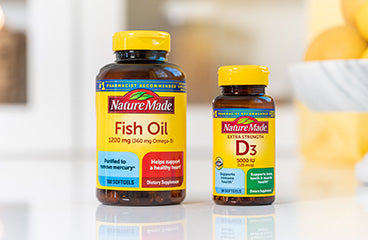
Heart-healthy Omega-3s (DHA and EPA) are primarily found in fatty fish, like salmon, tuna, sardines, and anchovies. If you are not a fish eater, consider adding an Omega-3 supplement, like Nature Made® Fish Oil Softgels, into your vitamin and supplement routine.†
Probiotics are beneficial bacteria that help the digestive tract function properly. By reinforcing your gut's population of good bacteria, probiotics can help keep your good bacteria in healthy numbers. Nature Made® specially formulates our probiotics to support your gut in different ways. Nature Made® Digestive Probiotic + Energy* B12 Gummies provide Bacillus coagulans IS-2 to help support your gut, with additional Vitamin B12 to help convert food into cellular energy.†
For wide range support, Nature Made® Ultra Strength 12 Strain Probiotics help provide coverage with 12 probiotic strains that help support healthy gut flora and are specially formulated to help relieve occasional gas, bloating, abdominal discomfort, constipation+, and irregularity.†
The first thing you should do when considering what vitamins to add to your daily routine is speak with your healthcare provider. Just ask them, "What vitamins should I take every day?" A healthcare provider can help you determine which vitamins you may need to take daily from exams and conversations about your health, lifestyle, and nutrition. Take note of food groups you lack in your daily diet. For example, looking into a Vitamin C supplement might be prudent if your diet is low in fruits.
If you don't eat much meat, you might be low in Vitamin B12, Iron, and Zinc, nutrients primarily found in animal products. Some dietary gaps are more common than others. The Scientific Report of the 2020 Dietary Guidelines Advisory Committee lists chronically under-consumed nutrients: Vitamins A, C, D, E, and K, Calcium, Magnesium, Potassium, Choline, and Dietary Fiber.[2]
Everyone has different reasons for using supplements! Vegans and vegetarians might take supplements to help fill in nutrients from a missing food group. If you're allergic to certain foods (or don't like them!), you can use supplements to help provide the nutrients you may be lacking from your diet. People with busy schedules can also find dietary supplements helpful for peace of mind, knowing you're getting the nutrients you need without sweating over meals you might not have complete control over.
To help determine which vitamins and supplements you should take daily, it’s best to first meet with your healthcare provider. Through simple tests, they can help determine which nutrients you might be lacking and help determine proper dosing.
Reading a supplement label may seem straightforward, but understanding the information can help you make informed choices. Look for the Supplement Facts panel to see what nutrients are included and in what amounts. The % Daily Value (%DV) indicates the percentage of the daily value for each nutrient contained in a single serving, as established by the FDA. The daily value is for adults and children ages 4 and up, unless otherwise indicated.
It’s also helpful to check the form of the nutrient. For instance, Vitamin D may appear as D2 (ergocalciferol) or D3 (cholecalciferol); D3 is the form naturally produced by the body when exposed to sunlight. Magnesium may be listed as magnesium oxide, citrate, or glycinate.
If you're comparing brands, look for products that are verified by third-party organizations for quality, purity, and potency. Nature Made has many USP Verified supplements, which means they meet high standards for manufacturing and labeling accuracy.
For more information on decoding supplement labels, check out this guide on how to read a supplement label.
Once you’ve stocked up on your daily vitamins and supplements, it’s important to store them properly to maintain their quality and effectiveness. Vitamins are sensitive to light, heat, moisture, and air, so storage matters more than most people think.
Here are some tips to store your supplements:
If your supplement's label includes special storage instructions, be sure to follow them to preserve product integrity.
Vitamins and supplements help supplement your diet and support your wellness routine. From a high-quality multivitamin to targeted nutrients like Vitamin D, Iron, or Omega-3s, your supplement routine should reflect your lifestyle and dietary needs in consultation with your healthcare practitioner
If you're just getting started or looking to fine-tune your daily routine, remember: consistency matters, and so does quality. Choose trusted brands, check your labels, and talk with your healthcare provider about what’s right for you. Explore Nature Made’s full lineup of daily vitamins and supplements to help support your health every day.†
*Vitamin B12 helps convert food into cellular energy.†
‡Based on publicly available information. Includes studies that use Lactobacillus rhamnosus GG alone or in combination with other probiotic strains.
▲Lactobacillus plantarum 10 Billion CFU
+Bifidobacterium lactis 2 Billion CFU
† These statements have not been evaluated by the Food and Drug Administration. These products are not intended to diagnose, treat, cure or prevent any disease.
NatureMade Contributor
Melissa Mitri, RD is a seasoned dietitian and health writer. She specializes in helping women move away from restrictive habits that lead to vicious yo-yo weight cycles. Melissa enjoys writing about health, nutrition, and fitness with the goal of simplifying complex health topics for the reader. Find out more about Melissa at www.melissamitri.com
Read More about Melissa Mitri, MS, RD
NatureMade Copywriter
Graham has a degree in film with a focus on screenwriting from the University of California, Santa Cruz. He enjoys learning new things and finding the best, most engaging way to communicate them to a wide audience. Graham appreciates simplicity in life and nutrition, and wants to find the easiest, no-stress ways to stay healthy.
Read More about Graham Morris
Science and Health Educator
Kalyn is a Registered Dietitian-Nutritionist and a Science & Health Educator with the Medical and Scientific Communications team at Pharmavite. Her experience in the field of nutrition prior to joining Pharmavite has included community and public health education, media dietetics, and clinical practice in the areas of disordered eating, diabetes, women’s health, and general wellness. Kalyn received her Bachelor of Science degree in Nutrition and Dietetics from Arizona State University in Phoenix, Arizona, and completed her dietetic supervised practice in Maricopa County, AZ, with an emphasis on public health. Kalyn is certified in Integrative and Functional Nutrition through the Academy of Nutrition and Dietetics, where she is an active member in addition to memberships in Dietitians in Functional Medicine, Women’s Health Dietitians, and the International Federation of Eating Disorder Dietitians.
Read More about Kalyn Williams, RDNReceive the Latest News and Special Offers