Welcome to our store
Discover which Nature Made vitamins and supplements can support your wellness goals†
Get started now.

Discover how you can get the benefits you want from the nutrients you need without the sugar normally found in gummies.†
New Zero Sugar Gummies‡
Access expert insights, research, and other helpful content related to your health.
Explore Health Resources
Learn where our story began, and how we continue to evolve alongside our customers.
Discover Nature Made$0.00 away from Free Shipping You have earned Free Shipping*
May 05, 2026
Energy
articles
,
Lifestyle Tips
articles
They say we now live in the attention economy. One thing that’s for sure is that modern life requires sustained attention and focus, and with so many variables to keep track of, it's common for mental fatigue to build over time.
One way many support their focus is by consuming caffeine whether that’s in coffee, tea, or supplements. We’ll break down what exactly caffeine is, how it works, why caffeine helps with focus, and more! So read on for a quick caffeine guide.
You’re probably familiar with caffeine as an ingredient in coffee, sodas, and other beverages. Caffeine is a naturally occurring stimulant found in coffee beans, certain tea leaves, and more, and it’s one of the most consumed substances in the world. You may have had coffee this morning or a caffeinated beverage with your lunch.
It’s common for people to use caffeine to support focus because it supports the perception of alertness, reduces sluggishness, and increases the ability to sustain attention for longer.[1] Caffeine is often paired with L-theanine, similar to how they are found in black and green tea, in dietary supplements, because they work together to support alertness.[2]†
How does caffeine work? Does caffeine help focus? While the common perception of caffeine is that it gives you energy, that’s not entirely accurate. Caffeine blocks adenosine receptors in the brain. Adenosine is a chemical that builds up in the brain throughout the day, signaling feelings of sleepiness. Caffeine blocks those receptors, so you don’t feel that build-up of sleepiness as acutely. So, rather than providing energy, it slows sleepiness and helps you feel more alert.[1]
It’s also important to know that caffeine doesn’t create cellular energy; it just reduces sleepiness. Cellular energy is generated by macronutrients consumed in your diet (carbohydrates, proteins, and fats), which undergo a process called energy metabolism (which requires B vitamins as essential cofactors) to produce ATP, a form of chemical energy that cells can use to perform their daily functions.[3]
The effects of caffeine typically begin within 30 to 60 minutes of consumption, providing a quick way to increase focus and alertness. That’s why many of us start the day with caffeine; it quickly reduces feelings of sleepiness.
While caffeine can help you feel more alert, it doesn’t replace the foundations of sustainable energy. Cellular energy is supported by balanced meals including macronutrients and micronutrients, and caffeine cannot replenish sleep debt. For the best sustainable energy practices, follow these four pillars: adequate sleep, balanced nutrition, regular physical activity, and hydration.
However, many people will feel a noticeable shift in alertness after caffeine, even if you’ve slept poorly the night before. While this doesn’t replenish sleep debt, it can be useful for getting started in the morning.
When caffeine clears the system, the adenosine built up in the meantime may hit all at once, which is commonly called a “crash.” This is a normal feeling, and understanding your caffeine sensitivity and timing can help you decide the best way to support your energy and alertness.
We’re all different, and caffeine sensitivity is just one of those factors that make us unique. Variations in caffeine sensitivity can be caused by a few key factors, namely genetics, tolerance, sleep, stress, and timing.
Genetic variation in the CYP1A2 gene can affect how quickly caffeine is metabolized in the liver. This variation can present in a few ways; some people metabolize caffeine quickly, meaning they feel the effects faster, while others metabolize caffeine more slowly, meaning the effects come later.[4]
Over time, caffeine tolerance may build up in individuals. If you consume caffeine regularly, you may notice that you need more to feel the same effects. This is because our brain adapts to caffeine’s effects, altering expression of adenosine receptors to address the changes in adenosine sensitivity brought on by caffeine.[5]
Sleep can also affect your sensitivity to caffeine. If you are consistently deprived of high-quality sleep, you may rely more heavily on caffeine, and your body and mind may respond differently than those of well-rested individuals.[6] Note that for some individuals, caffeine can amplify their stress response.[7] It’s important to be mindful of timing when consuming caffeine.
Timing can affect your caffeine response, as the half-life of caffeine in the system is approximately five hours in adults.[8] Taking caffeine too late in the day can sometimes disrupt sleep, affecting your alertness the next day.[6] Be mindful of caffeine timing and avoid taking it in the afternoon or evening.
While caffeine is generally safe and consumed by millions, if not billions, of people daily, you should still be aware of its downsides that may affect your day. For example, high doses of caffeine, or people who are particularly sensitive to caffeine, may amplify stress response, which can lead some people to notice higher feelings of restlessness or anxiousness, such as jitters.[7] Pay attention to your body and your mind.
As stated above, consuming caffeine too late in the day can interfere with falling asleep or sleep quality.[6] This naturally occurs because caffeine blocks receptors that promote sleepiness. That’s why it’s important to be mindful of timing and amount you take, and to keep a cutoff time to avoid impacting sleep.
Be aware that regular use of caffeine can build up a temporary dependence, and cutting yourself off can cause some temporary headaches or low energy.[9] Something to consider when evaluating your caffeine intake.
Everyone has different caffeine thresholds. The FDA has noted that up to 400mg of caffeine per day is not generally associated with negative effects in most healthy adults.[10] For reference, an 8 ounce cup of coffee has about 90-100 mg of caffeine, and black tea has about 50 mg. Listen to your body and don’t exceed your personal threshold.
If you have concerns about caffeine or any specific questions about your individual situation, please consult a trusted healthcare provider; they are equipped to provide personalized guidance.
Nature Made offers a range of supplements containing caffeine to support your perceived alertness and focus. For cellular energy support♢, consider supplements that include choline, vitamin B12, and other B vitamins essential for energy metabolism. Nature Made also offers supplements for cognitive function support.†
Nature Made Focus Boost includes caffeine and L-theanine, a clinically studied combo to help reduce mental fatigue and support your focus and attention.†
Nature Made also offers Zero Sugar‡ EnergyWell Drink Mix, an everyday, on-the-go drink mix powder providing 100 mg of caffeine for energy♢ plus ingredients for hydration and wellness support. Just mix one stick pack into water and enjoy.†
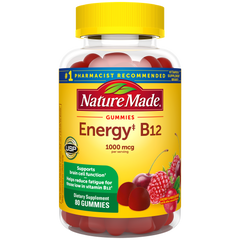
If you’re looking for tasty cellular energy support, our Energy♢ B12 Gummies help convert food into cellular energy and help reduce fatigue for those low in B12 in two daily gummies.†
These supplements complement a healthy routine based on the four foundational principles of energy support: sleep, activity, nutrition, and hydration. Explore our Energy Supplements today! Nature Made is the #1 Pharmacist Recommended Vitamin & Supplement Brand.*†
‡ Not a low calorie food.
♢ Helps convert food into cellular energy†
* Based on a survey of pharmacists who recommend branded vitamins and supplements
† These statements have not been evaluated by the Food and Drug Administration. These products are not intended to diagnose, treat, cure or prevent any disease.
NatureMade Copywriter
Graham has a degree in film with a focus on screenwriting from the University of California, Santa Cruz. He enjoys learning new things and finding the best, most engaging way to communicate them to a wide audience. Graham appreciates simplicity in life and nutrition, and wants to find the easiest, no-stress ways to stay healthy.
Read More about Graham Morris
Science and Health Educator
As a member of the Medical and Scientific Communications team, Sandra educates healthcare professionals and consumers on nutrition, supplements, and related health concerns. Prior to joining Pharmavite, Sandra worked as a clinical dietitian at University of Chicago Medicine in the inpatient and outpatient settings. Sandra received her Bachelor of Science degree in Nutritional Science, with minors in Spanish and Chemistry from the University of Arizona in Tucson, AZ. She earned her Master of Science degree in Clinical Nutrition from RUSH University in Chicago, IL. As part of her Master’s program, Sandra performed research on physical activity participation and correlates in urban Hispanic women.
Read More about Sandra Zagorin, MS, RDReceive the Latest News and Special Offers