Do Multivitamins Work and Should I Take One?

Do Multivitamins Work and Should I Take One?

Feb 20, 2026 Lifestyle Tips articles Multivitamins articles
5 MIN

Do Multivitamins Work and Should I Take One?

Quick Health Scoop

  • Multivitamins are a supplement that provides essential vitamins and minerals your body may need and may also include herbs and other nutrients like Omega 3's
  • Many Americans often don’t eat a balanced diet, and even if they do, they might not be getting enough of some key essential nutrients from food[6]
  • Taking a multivitamin increases overall nutrient intake, and helps to close nutrient gaps, especially for people who can’t or don’t get the recommended amounts of vitamins and minerals from food alone
  • Multivitamins offer a range of benefits to support your health and wellbeing

In an ideal world, we would all eat a variety of healthy foods every day. Healthy foods include fruits, vegetables, whole grains, dairy and, a focus on higher protein intake and limiting added sugars, as highlighted in the 2025-2030 Dietary Guidelines for Americans.[4] Including these foods provide us with the nutrients we need, from Vitamin A to Zinc. But life happens and sometimes our best intentions fall by the wayside as we reach for packaged, convenience foods that might not be the best choice. Multivitamin use, however, can help supplement our diets. Perhaps that’s why so many people turn to multivitamins to help fill in the nutritional gaps. But what exactly are multivitamins? And, more importantly, how do multivitamins work?

What Are Multivitamins?

Let’s start with the reality that many Americans have poor eating habits, are eating healthy, and don't consume the recommended nine servings of fruit and vegetables every day. As a result, many people who follow a Western diet don’t meet the recommended daily allowances established by the U.S. Institute of Medicine for many essential vitamins and minerals.[1]

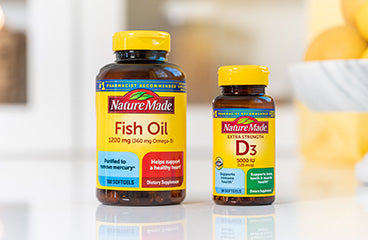
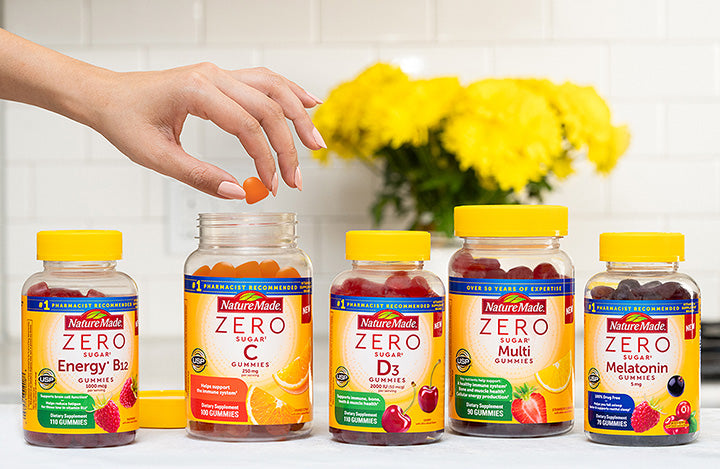
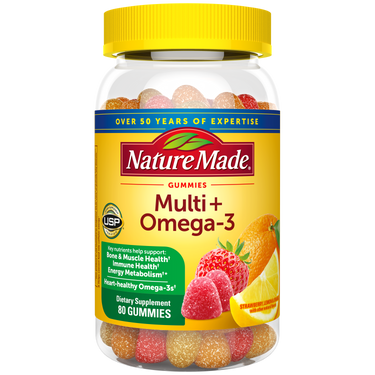
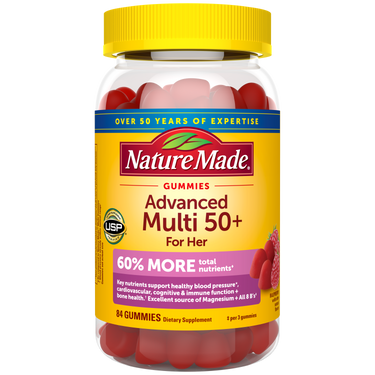
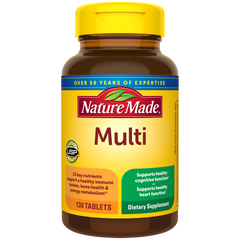
While multivitamins should never replace a balanced, healthy diet, they can provide vitamins and minerals essential to your health and help fill nutrient gaps. So, what are multivitamins? Sometimes called multis or vitamins, multivitamins are a supplement that typically pack many essential vitamins and minerals, often in the form of a tablet, capsule, gummy, or gel cap (also known as softgels). softgel). Commonly, multivitamins are taken once a day and include many vitamins and minerals, some with amounts that are above the recommended daily amounts.[2]

Because multivitamins are not medications, you don’t need a doctor’s prescription to buy these dietary supplements. You can purchase them at most pharmacies, grocery stores, mass merchandise and club stores, as well as online retailers.

Always check the Supplement Facts Panel for the proper dosage on your multivitamin tablet, capsule, or gummy to ensure you take the correct amount.

Learn More: How to Choose a Multivitamin

What are the Benefits of Multivitamins?

The body requires 13 vitamins and at least 16 minerals essential to your health.[3] Depending on the brand and product, multivitamins will contain a variety of these vitamins, minerals, and perhaps other ingredients, such as fatty acids and herbs. And the specific amount of each nutrient needed daily varies by age, gender, and if you are pregnant or lactating.[4]

All of these nutrients play different but important roles in the body. Think of multivitamins as the Swiss Army Knife of supplements, as they deliver multiple benefits in supporting good health.

Your body needs these important nutrients for a variety of functions, ranging from reproduction to maintenance and growth. Vitamins and minerals help convert food into cellular energy, build strong bones, support vision, build protein, provide antioxidant benefits, regulate bodily processes, support your immune system, and provide many other health benefits., regulate bodily processes, support your immune system, and provide many other health benefits.[5]†

Learn More: What Vitamins Should You Take Daily?

Do You Need to Take a Multivitamin?

If you’re trying to live a healthy lifestyle, you strive to make the right choices every day. You manage your stress, eat healthily, exercise, and get a good night’s sleep. But life often throws a curveball, which might impact your health and the choices you make each day. You know yourself better than anyone. If you follow the new Dietary Guidelines for Americans, it encourages eating a variety of nutrient-dense foods.[4] Additionally, it’s a good idea to choose foods and beverages with less saturated fat, sodium, and added sugars.[6] Ask yourself a few questions to determine how healthy you’re truly eating:

  • Do you regularly choose a variety of fruits (bananas, blueberries, cantaloupe, kiwi, oranges,) and vegetables (broccoli, carrots, red bell peppers, spinach, tomatoes)?
  • Do you prioritize high-quality, nutrient-dense protein foods, such as eggs, poultry, seafood, beans, legumes, seeds and nuts?
  • Do you avoid processed foods, such as bacon, potato chips, and cookies?
  • Do you eat a variety of whole grains, such as oats, wheat, bulgur, quinoa and barley?
  • Do you include healthy fats such as fatty fish, avocados, olive oil, walnuts, and almonds?

If you answered yes to all of these questions, then you’re probably getting most of the nutrients you need from food and beverages every day. But if you answered no to even one or two questions, you might not be getting enough key nutrients your body needs daily. Either way, to help close nutrient gaps and provide your body with a consistent supply of essential nutrients, it may be a good idea to take a daily multivitamin.

Read More: Healthy Meal Prep Recipes

Also, keep in mind that certain people—including pregnant and breastfeeding women, people age 50 and older, vegetarians and vegans, smokers, and people with some health conditions—may need more or less of certain vitamins and minerals. Also, certain health conditions or medications might make it even more difficult to get the necessary nutrients from food alone. If you are concerned about any of the above, it’s a good idea to speak to your doctor or pharmacist.

Taking a multivitamin can be another healthy choice in your “healthy lifestyle toolbox.” It increases your nutrient intake and gives you confidence in knowing that you’re covering your basic nutritional needs even on days when you might skip a meal or make less-than-healthy food choices.

How Do Multivitamins Actually Work?

Once you take a multivitamin by mouth, the supplement dissolves and works its way through your body in different ways. It is important to take your multivitamin along with some food and water to help dissolve the supplement (if it’s a tablet or softgel), and it’s best to take it with a meal that contains some fat, to help absorb fat-soluble vitamins vitamins A, D, E, and K that might be in the multivitamin.

The water-soluble vitamins (like the B vitamins and vitamin C) are absorbed directly into the bloodstream as food is broken down during digestion and when a supplement dissolves. The fat-soluble vitamins get into the blood through the intestinal wall’s lymph channels. Minerals move through the body in a variety of ways, with some (like potassium) being quickly absorbed into the bloodstream while others (like calcium) require a carrier for absorption and transport.[5]

What You Need To Know

Multivitamins are a convenient choice for anyone who wants to make sure their bodies are getting enough of the nutrients they need. Taking a multivitamin increases overall nutrient intake and helps to close nutrient gaps, as most Americans don’t get the recommended amounts of vitamins and minerals from food alone. Plus, multivitamins offer a range of benefits to your health and well-being. As always, you should check with your healthcare provider before taking any new vitamins or supplements.

Learn More About Health & Supplements:


† These statements have not been evaluated by the Food and Drug Administration. These products are not intended to diagnose, treat, cure, or prevent any disease.


References:

  1. Linus Pauling Institute. “Are Multivitamins Useless?” 2020. Accessed on: October 13, 2020. https://lpi.oregonstate.edu/are-multivitamins-useless
  2. National Institutes of Health. “Multivitamin/mineral Supplements: Fact Sheet for Consumers.” November 22, 2019. Accessed on: October 14, 2020. https://ods.od.nih.gov/factsheets/MVMS-Consumer/
  3. Pharmacy Times. “Vitamins and Minerals Explained.” https://www.pharmacytimes.com/view/vitamins-and-minerals-explained
  4. U.S. Department of Agriculture; U.S. Department of Health and Human Services. Dietary Guidelines for Americans, 2025–2030. 10th ed. January 2026. Accessed February 3, 2026. https://www.dietaryguidelines.gov
  5. HelpGuide. “Vitamins and Minerals: Are You Getting What You Need?” Adapted from Making Sense of Vitamins and Minerals, a special health report published by Harvard Health Publishing. 2019. https://www.helpguide.org/harvard/vitamins-and-minerals.htm
  6. 6. Reider CA, Chung RY, Devarshi PP, Grant RW, Hazels Mitmesser S. Inadequacy of Immune Health Nutrients: Intakes in US Adults, the 2005-2016 NHANES. Nutrients. 2020;12(6):1735. Published 2020 Jun 10.

Authors

Lisa Beach

NatureMade Contributor

Lisa Beach is a seasoned journalist whose work has been published in The New York Times, Good Housekeeping, Eating Well, Parents, AARP’s Disrupt Aging, Optimum Wellness, and dozens more. She also writes for a variety of health/wellness-focused brands. Check out her writer’s website at www.LisaBeachWrites.com.

Read More about Lisa Beach

Melissa Dorval Pine, RD

Senior Manager, Medical and Scientific Communications

Melissa is a Registered Dietitian and provides leadership to Pharmavite’s Medical and Scientific Education team. She has over 20 years of experience educating consumers, healthcare professionals, retailers and employees about nutrition, dietary supplements, and overall wellness. Prior to joining the Medical and Scientific Communications team, Melissa launched and managed Pharmavite’s Consumer Affairs department and worked as a clinical dietitian throughout Southern California. Melissa received her Bachelor of Science degree in Nutritional Sciences from the University of Arizona in Tucson, Arizona, and completed her dietetic internship at Veteran’s Hospital in East Orange New Jersey.

Read More about Melissa Dorval Pine, RD