Aug 23, 2011
Feeling blue? As the long winter months loom ahead, here is some advice which may help brighten your mood. Here are some tips which may help you feel a bit sunnier.
Exercise: We know exercise is good for our health and exercising regularly can also help maintain our emotional health and well-being. The physiological benefits of exercise are well-established in the scientific literature; research also supports the psychological benefit of exercise. The clear benefits for our mind/mood should be emphasized equally, since the psychological benefit of exercise may be very relevant to the present life situations of some individuals.
The type of exercise doesn’t seem to matter. Engaging in either aerobic or anaerobic exercise seems to be equally effective for boosting mood. Aerobic or endurance exercise is exercise that requires extra oxygen, such as walking, jogging, biking, aerobic dancing, etc. Aerobic exercise can be sustained for a longer period of time. Anaerobic exercise, on the other hand, does not require extra oxygen, and consists of shorts bursts of exercise such as powerlifting, sprinting, etc. Anaerobic exercises are short in duration due to the strenuous nature of the exercise.
Before beginning a regular exercise program, you should obtain your physician’s clearance. Increasing your physical activity and regular exercise (for at least 30 minutes on most days of the week), is a positive way to get yourself on the road to better health.
Social Activity: Being around people can naturally lift our spirits. This is true at any age, but especially as we get older.
Make a point to go out with friends, spend time with family, or join a group in the community such as a book or crafts club. You can reap double benefits by starting a walking club or hiking troop in your neighborhood! Doing so can allow you to socialize and exercise at the same time. Also, keeping active and social may help keep stress to a minimum to help enhance overall mood.
Diet and Nutritional Supplementation: It is always important to eat a healthy, well-balanced diet rich in whole grains, vegetables, fruits and lean protein sources (fish, poultry) for good health and to help keep us in balance. However, it may be difficult to eat well on a daily basis., In turn, may affect our physical and emotional balance may be affected. There are some nutritional supplements that may also help boost our mood. Before taking supplements for mood or emotional health it is important to speak to your health care practitioner, to be sure you are choosing the right treatment for you.
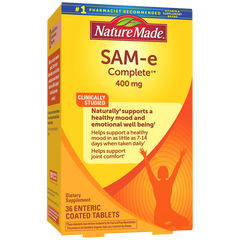
SAM-e: SAM-e, or S-adenosylmethionine, is a compound naturally produced in the body that may increase levels of neurotransmitters, or brain chemicals, responsible for mood.
Factors such as old age, certain health conditions and genetics can impact the amount of SAM-e found in the body. Consequently, those factors can also affect mood. When levels are low, a SAM-e supplement can help restore both the body’s supply of SAM-e. B vitamins are also helpful because they allow SAM-e to work effectively.Therefore, SAM-e along with a B-complex supplement is recommended for mood health.
B vitamins: The B vitamins are involved in many biochemical reactions in the body including brain and nervous system function and energy production. A deficiency in one or more of the B vitamins—particularly B6, B12 and folic acid–may result in poor cognitive health, which can affect mood.
Also, individuals under a high amount of stress may excrete the B vitamins from their bodies more rapidly than those not exposed to elevated stress levels to which supplementation can help. As mentioned above, if considering SAM-e for mood support, a B complex is recommended to help SAM-e work effectively.
St. John’s Wort: St. John’s Wort has a popular history and is used today for enhancing mood and emotional well-being. The exact mechanism of how St. John’s Wort works is unknown, however, it is thought to work similarly to common prescription anti-depressant medications used today. St. John’s Wort may exert a mild anti-depressive action, and therefore may help to elevate mood. The mood-elevating effects of St. John’s Wort were originally thought to be due solely to the active component, hypericin, but hypericin does not act alone. As with many herbal medicines, St. John’s Wort relies on the complex interplay of many active constituents for its antidepressant actions. Note: For people who tend to be sensitive to the sun (such as fair-skinned individuals), they should be cautioned when taking SJW, or, individuals taking large doses of the herb should avoid excessive sun exposure. In addition, St. John’s Wort may have additive effects with SSRI’s and other antidepressants, and should not be used at the same time due to possible adverse effects. St. John’s Wort is also contraindicated in pregnancy because it may stimulate uterine contractions It has also been discovered that SJW may affect the Cytochrome P450 system, which is responsible for metabolizing various common medications. If you are taking prescription medication(s), it is important to check with your health care professional before taking St. John`s Wort.
References: Fadillioglu MD, et al. Effects of Moderate exercise on mild depressive mood, antioxidants and lipid peroxidation. Bull Clin Psychopharmacol 2000;10:194-200.
Scully D, et al. Physical exercise and psychological well-being: a critical review. Br J Sports Med 1998;32:111-120.
Pollock ML, et al. The recommended quantity and quality of exercise for developing and maintaining cardiorespiratory and muscular fitness, and flexibility in healthy adults. Med Sci Sports Exerc 1998;30:975-991.